
How to Choose a Pipe Repair Packer
By Reliance Trenchless Technology
Choose a repair packer by the measured pipe bore, required repair length, available access and flow arrangement—not by the model name alone. Then confirm the working dimensions, material compatibility and exact supplied configuration before ordering.
This is a purchasing guide, not an installation procedure or a model approval. Pressure settings, repair design and site safety must follow the confirmed instructions for the selected equipment and repair system.
This guide is available in English. Choosing another language opens that language’s resource library.
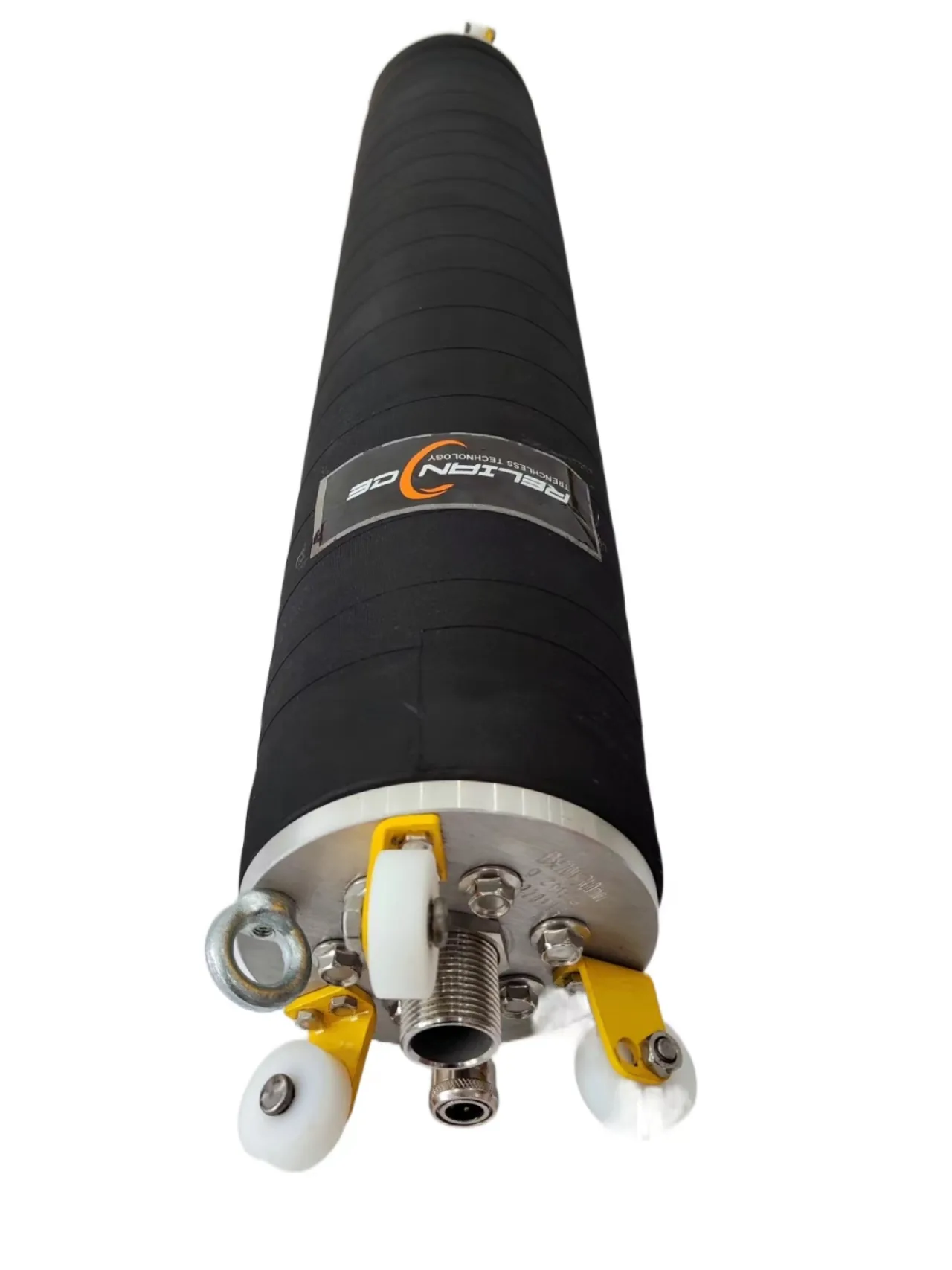
1. Define the repair before choosing the tool
Start with the work you need to carry out: a localized patch repair, the length of the defect and the proposed repair material. A repair packer is equipment used in point-repair work; it is not, by itself, a specification for the finished repair. Do not assume a product sold for temporary pipe isolation is interchangeable with a repair packer.
Reliance’s published packer information separates configurations with and without bypass and describes custom lengths and dimensions. Treat those as options to discuss, not confirmation that every catalogue model is available in every configuration. A useful enquiry describes the repair first and asks the supplier to confirm the matching equipment.
Sources and supporting product information
Reliance repair packers: guide, source notes and complete specificationsReliance pipe plugs: isolation, bypass and testing families2. Record pipe fit and access as separate measurements
Record the internal diameter at the intended repair location, the pipe material and the condition of the bore. Keep a nominal designation separate from a measured internal diameter. Where the pipe is irregular, obstructed or changes diameter, provide a sketch or inspection images rather than reducing the situation to a single model number.
Access is a second question: the equipment must reach the repair location. Describe the entry opening, available insertion space, bends and the distance to the defect. The packer brochure lists deflated lengths and identifies wheel configurations; request any additional dimensions needed to assess the complete assembly, including its end fittings.
| Information | What to record | What to confirm |
|---|---|---|
| Pipe bore | Measured internal diameter, material and local condition | Permitted fit range for the proposed model |
| Access route | Entry opening, insertion space, bends and reach | Deflated assembly dimensions and wheel/end-fitting arrangement |
| Repair coverage | Defect length and proposed finished repair length | Usable working length of the selected configuration |
Sources and supporting product information
Reliance repair packers: guide, source notes and complete specifications3. Do not equate deflated length with usable repair length
The packer table labels a dimension as “deflated length.” That label does not establish the usable repair length. Ask for a dimensioned drawing or written confirmation of the working area for the proposed model and configuration. Do not derive patch coverage from the overall catalogue length or from a model suffix.
State both the observed defect length and the proposed repair coverage so the technical reviewer can evaluate them separately. Where coverage, assembly dimensions or material requirements are not yet known, leave the selection open. A quotation should identify what was confirmed and what remains dependent on the repair design.
Sources and supporting product information
Reliance repair packers: guide, source notes and complete specifications4. Confirm bypass, repair materials and the supply boundary
Say whether the work requires a flow path or a separate flow-management arrangement. The Reliance brochure describes packers with and without bypass, but that does not establish the bypass capacity, connection details or suitability for a particular site. Ask for the arrangement for the exact packer being quoted.
For a resin-and-fiberglass patch, identify the proposed resin formulation and reinforcement, and disclose the expected application conditions. Reliance’s material documents distinguish formulations and reported working or curing conditions. Do not transfer a curing time from one formulation or temperature condition to another, or assume separately listed products form a validated combination.
Request an itemized quotation. Ask which packer, wheels, hoses, pressure controls, fittings, protective accessories and consumables are included, which are optional and which must be supplied separately. A “packer” quotation is not automatically a complete repair kit.
Sources and supporting product information
Reliance repair packers: guide, source notes and complete specificationsReliance resin and fiberglass: formulations and source conditions5. Resolve document differences before confirming a model
The packer product page retains both the brochure and spreadsheet and flags differences in model ranges and dimensions. Neither format should be assumed to supersede the other. Include the document name and the exact row you used in your enquiry, and ask which specification applies to the proposed supply.
Keep the confirmed model, drawing, dimensions and operating documentation together with the quotation. A maximum inflation value in a catalogue is not a project-specific operating setting or permission to substitute a different configuration. Ask the supplier and the responsible technical reviewer to confirm the applicable equipment instructions before the order is finalized.
Sources and supporting product information
Reliance repair packers: guide, source notes and complete specificationsAn enquiry that exposes the missing information
For a localized resin-and-fiberglass repair, first send the measured bore, defect location and length, entry dimensions, available insertion space and whether flow needs to be managed during the work. Identify the intended material system and the source document you have reviewed.
Then ask: “Which packer configuration should be evaluated for these conditions? Please confirm its fit range, usable working length, deflated assembly dimensions, bypass arrangement and included accessories.” This is an enquiry example, not a customer case or a recommendation of a particular model. It makes the unanswered questions visible before price comparison.
What to include in your enquiry
Send the information you have and identify what still needs measurement or confirmation. A requested delivery date is a requirement to review, not a promised lead time.
Pipe material and measured internal diameter at the repair location; identify any irregularity or obstruction.
Defect location and length, proposed repair coverage, and a sketch or inspection images where available.
Entry opening, insertion space, access route and distance to the repair location.
Whether flow must be retained or diverted, and what flow-management arrangement is planned.
Proposed resin/fiberglass system and application conditions; identify unconfirmed compatibility questions.
Candidate model and source document/row, quantity, destination and requested delivery date.
Request confirmed working dimensions, an itemized supply list and model-specific instructions.
The contact form opens an email draft for you to review and send. Opening it does not confirm delivery.