Direct Specialist Manufacturers vs Trading Middlemen for Trenchless Supplies
Compare direct specialist manufacturers vs trading middlemen for trenchless supplies: supply chain markups, technical CAD support, QA testing, and lead times.
By Reliance Trenchless Technology8 min read
Continue with AI
Bring this article into your own conversation.
Preferred Sources
Keep up with Reliance Trenchless on Google.
Availability depends on your account and region.
In the international underground utility rehabilitation industry, procurement directors and project bidding managers face an enduring commercial dilemma: should they procure equipment and consumables from traditional European trading distributors, or partner directly with specialized OEM/ODM manufacturing bases?
Trenchless rehabilitation is technically unforgiving. Whether expanding a mechanical stainless steel repair sleeve inside a live sewer, deploying an inflatable multi-size pipe plug to hold back high-pressure floodwaters, or operating a centrifugal spin-cast mortar sprayer, equipment failure triggers catastrophic jobsite flooding, regulatory fines, and contractual liquidated damages.
Historically, civil contractors relied on European trading brands under the assumption that geographical proximity guaranteed superior quality. However, as global supply chains have evolved, an increasing number of international EPC contractors across the Middle East, Europe, and Asia-Pacific are bypassing intermediate trading agents. Sourcing directly from specialized engineering manufacturers delivers 30% to 40% total cost of ownership (TCO) savings, direct engineering collaboration, and drastically shorter delivery lead times.
This guide provides an objective procurement evaluation framework comparing direct specialist manufacturers against traditional trading middlemen.
Supply chain architecture and commercial markup comparison
The primary structural driver of inflated trenchless equipment pricing is the multi-tiered distribution chain typical of legacy European brands.
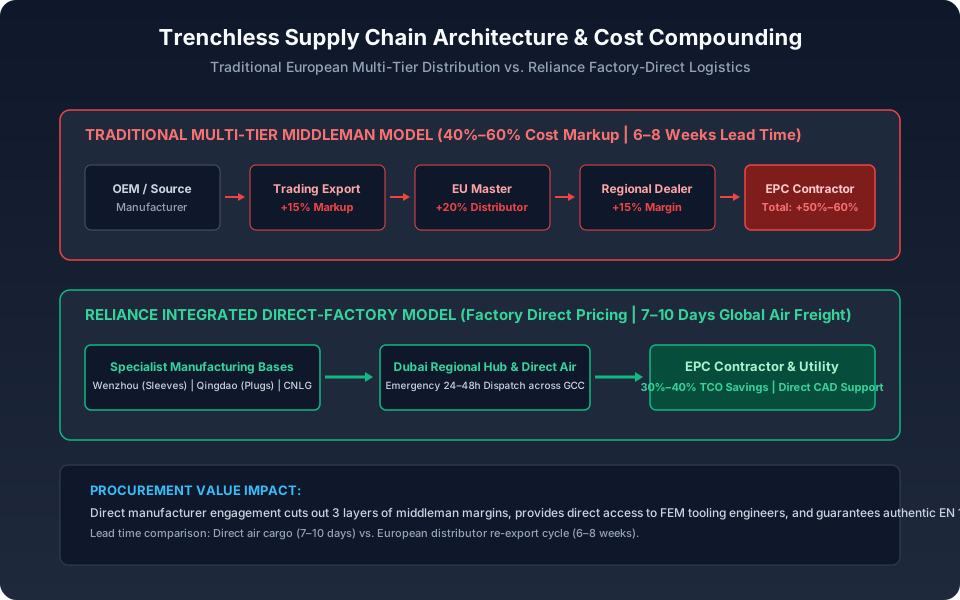
When an engineering contractor orders pipe plugs, packers, or repair sleeves through a conventional European distribution network, the product passes through as many as four commercial intermediaries:
Source Production Plant: Fabricates the physical steel shell, vulcanized rubber bladder, or electronic control box.
Export Trading Agent: Adds documentation, customs clearance, and an initial 10%–15% export margin.
European Master Brand Distributor: Warehouses the product in Germany, the UK, or France, re-badges it with proprietary trade names, and adds a 20% to 35% corporate overhead and marketing markup.
Regional Territory Dealer: Handles in-country bidding and adds another 15%–20% dealer markup before invoicing the final contractor.
By the time the equipment arrives on a jobsite in Dubai, Riyadh, Singapore, or Rotterdam, the compounding effect of these multi-tier markups inflates the procurement cost by 50% to 60% above actual production value. Furthermore, this multi-layered bureaucracy extends order lead times to 6–8 weeks for standard stock and up to 14 weeks for non-catalog configurations.
In contrast, the Reliance direct-factory model eliminates intermediate layers entirely. By operating dedicated, integrated production bases—Wenzhou Vanto for mechanical repair sleeves, Qingdao Xinya for inflatable pipe plugs and packers, and CNLG for centrifugal spin-cast equipment—under a unified global brand, contractors buy directly from the engineering plant floor. Equipment ships via express air freight within 7–10 days or dispatches within 24–48 hours from the regional warehouse hub in Dubai.
| Procurement Parameter | Direct Specialist Manufacturer (Reliance) | Traditional Trading Middleman / Distributor |
|---|---|---|
| Pricing Structure | Factory-direct pricing; zero intermediate markup | Compounded markups (+40% to +60% above factory cost) |
| Technical Support Interface | Direct access to CAD, tooling, and Finite Element Analysis (FEA) engineers | Sales representatives reading generic product catalog sheets |
| Material Quality Verification | Original EN 10204 3.1 mill test certificates with primary heat numbers | Third-party letters or generic certificates of conformity |
| Custom Engineering Agility | Prototyping cells deliver custom CAD in 24h, custom tooling in 5–7 days | Slow bureaucracy; custom requests rejected or quoted at 10–14 weeks |
| Quality Control Transparency | 100% in-house hydrostatic burst and decay test records per serial number | Batch sampling; rarely possesses in-house pressure test chambers |
| Emergency Lead Time (GCC) | 24–48 hours from Dubai regional hub; 7–10 days direct air cargo | 6 to 8 weeks standard shipping from European warehouses |
| Warranty & After-Sales Claims | Factory engineers evaluate root cause directly; immediate replacement | Prolonged claims submitted up a 3-tier distributor hierarchy |
Engineering collaboration vs catalog reselling
When municipal pipeline projects encounter unforeseen site anomalies—such as deformed non-standard diameters, ovalized culverts, or extreme hydrostatic groundwater heads—contractors need instant engineering calculations, not sales rhetoric.
Trading intermediaries operate as transactional catalog resellers. Their sales personnel are trained to match project specifications to existing SKU numbers listed in printed price books. If an EPC contractor encounters a non-standard pipeline size—such as a DN700 trunk line or a DN1800 stormwater culvert—the middleman's typical response is to declare the size unavailable or impose astronomical minimum-order surcharges with 3-month factory queues.
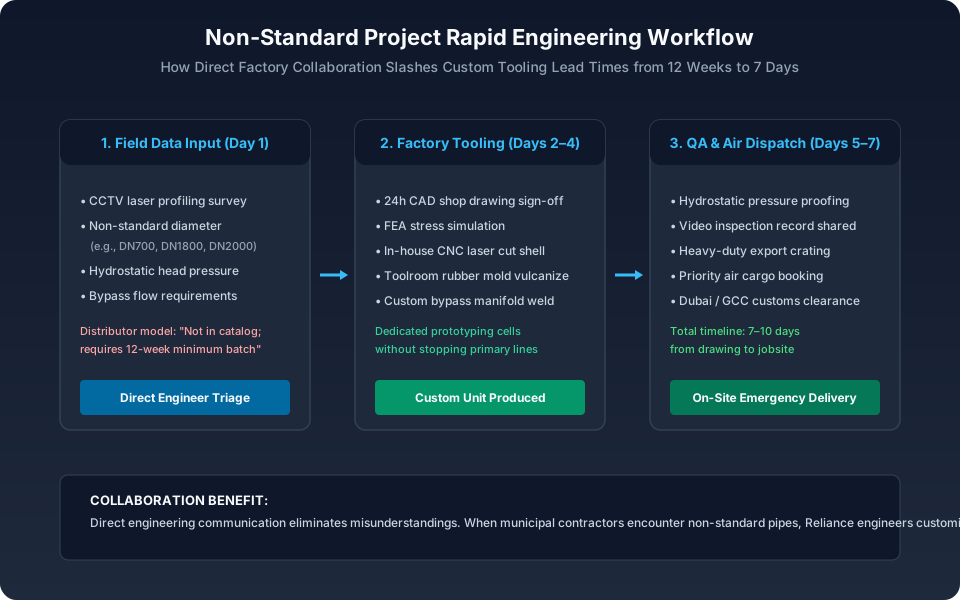
Direct specialist manufacturers operate as collaborative engineering partners:
Direct CAD and FEA Stress Analysis: When contractors submit CCTV laser profilometry data, factory design engineers run Finite Element Analysis (FEA) within 24 hours to calculate precise rubber wall thinning, contact pressures, and stainless steel yield stresses under specified groundwater heads.
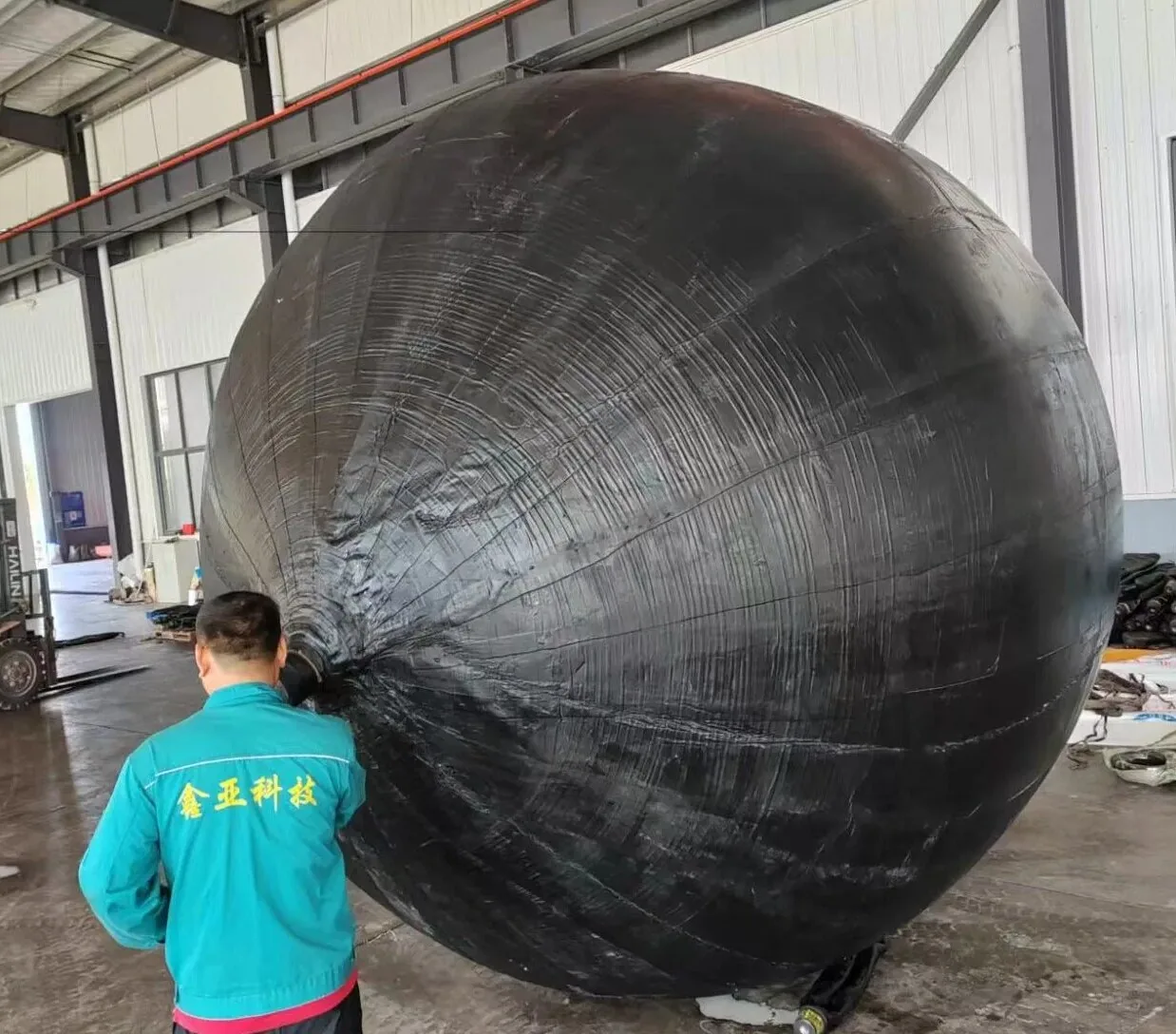
In-House Tooling and Prototyping Cells: Specialized plants maintain dedicated prototyping CNC laser cutters, high-tonnage vulcanizing presses, and custom mandrel lathes. Non-standard sleeve diameters (such as the DN700 Instant-Lock sleeve) or custom-length bypass packers are engineered, fabricated, and pressure-tested in days rather than months. A notable example is the rapid fabrication of the massive custom DN5500 inflatable plug for the Abu Dhabi STEP tunnel project.
Quality control, testing transparency and material traceability
In high-liability municipal tenders, technical submittals require rigorous material traceability. A pipe plug blowout or a sleeve seal failure can lead to catastrophic flooding of deep shafts.
Trading middlemen frequently source from disparate subcontractors and repackage products under a single brand. This practice breaks the chain of material custody:
Untraceable Metal Alloys: Stainless steel components may be stamped "316L" but lack verifiable chemical spectrometry records, risking catastrophic chloride pitting corrosion in saline coastal groundwater.
Degraded Rubber Formulations: Rubber compounds sourced through trading intermediaries may use reclaimed rubber or substandard EPDM blends with high compression set values, causing premature hardening and leakage within 2–3 years.
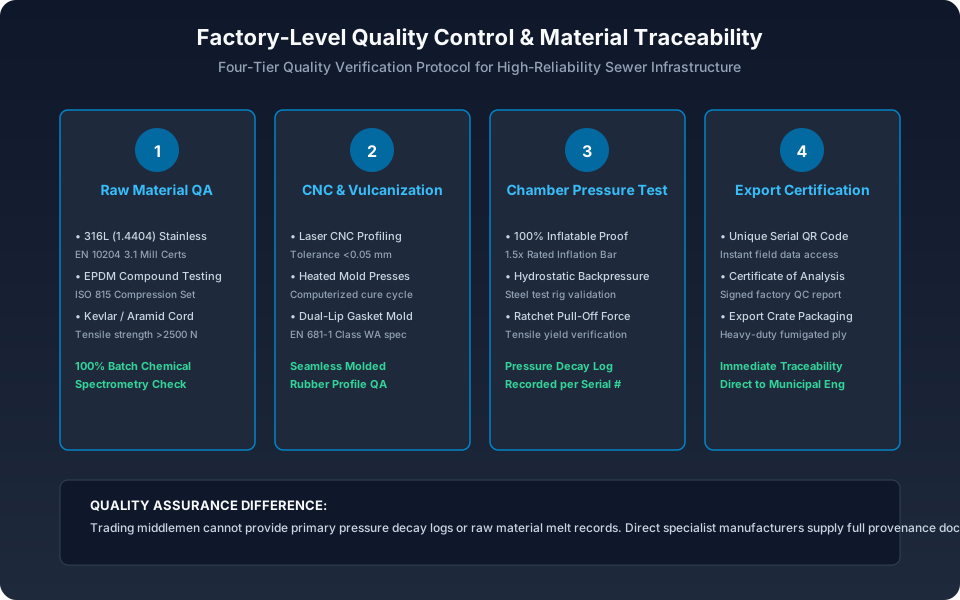
Direct specialist manufacturers enforce strict four-tier Quality Assurance (QA) protocols:
Raw Material Verification: Every heat of 316L (1.4404) stainless steel is verified via optical emission spectrometry and supplied with authentic EN 10204 Type 3.1 mill test certificates.
Elastomer Aging & Rheology: Vulcanized EPDM rubber gaskets are tested in-house in accordance with EN 681-1 and ISO 815 for tensile strength, elongation at break (>400%), and compression set resistance.
100% Individual Hydrostatic Proof Testing: Inflatable pipe plugs and repair packers are not batch-sampled; each individual unit is inflated inside heavy-walled steel test chambers to 1.5 times its rated operating pressure while pressure decay is logged digitally.
Unique Serial Traceability: Products are laser-etched with unique serial QR codes, allowing municipal inspectors on site to scan the tool and instantly download its factory pressure test chart and material certificate.
The Reliance hybrid model: Manufacturing clusters with regional hub
The traditional objection to sourcing directly from overseas manufacturing bases was shipping transit time and localized customer support. Contractors feared that purchasing directly from China would leave them stranded during jobsite emergencies.
Reliance resolves this challenge through an integrated hybrid logistics model:
Specialized Domestic Manufacturing Clusters: Concentrating technical production in mature industrial clusters—precision stainless steel fabrication in Wenzhou, advanced hyperelastic rubber vulcanization in Qingdao, and high-pressure progressive pump machinery in Zhejiang (CNLG)—maximizes engineering specialization and material economies of scale.
Regional Stock and Technical Hub in Dubai: To serve the fast-growing Gulf Cooperation Council (GCC) infrastructure market, Reliance maintains a centralized regional warehouse in Dubai, UAE. High-demand sizes of Instant-Lock sleeves and multi-size pipe plugs are stocked locally for 24 to 48 hour express dispatch to jobsites in the UAE, Saudi Arabia, Qatar, and Oman.
Priority Global Air Freight: For custom engineering orders, long-term partnerships with international air cargo carriers guarantee direct airport-to-door delivery within 7 to 10 working days worldwide.
Vendor evaluation checklist for trenchless procurement
When vetting prospective trenchless equipment vendors for municipal tenders, procurement officers should utilize the following checklist:
[ ] Can the vendor provide original EN 10204 3.1 mill test certificates with traceable heat numbers for all stainless steel components?
[ ] Does the vendor perform 100% pressure-decay testing in certified steel test chambers for every serial number, or do they rely on statistical batch sampling?
[ ] Are technical inquiries answered by licensed CAD/FEM engineers, or routed through external sales brokers?
[ ] Can the vendor manufacture non-standard lengths or custom bypass diameters within a 5–7 day production window?
[ ] Does the vendor offer localized regional stock capable of emergency same-week dispatch during municipal bypass emergencies?
Frequently Asked Questions
How does buying trenchless supplies directly from specialized manufacturers save 30% to 40% in cost?
Traditional European equipment procurement passes through multiple commercial layers: factory OEM, export agents, European master distributors, and regional territory resellers. Each intermediary adds a 15% to 25% margin. Sourcing directly from Reliance's dedicated production bases eliminates these distribution markups while preserving identical 316L and EPDM material specifications.
What quality assurance documents should contractors demand when evaluating trenchless suppliers?
Contractors should demand EN 10204 Type 3.1 mill test certificates identifying heat numbers and chemical spectrometry for stainless steel, ISO 815 compression set and aging test reports for EPDM rubber gaskets, and individual pressure-decay test logs certified for each serial number.
Can direct manufacturers produce non-standard or custom-diameter repair equipment faster than trading middlemen?
Yes. Trading companies merely resell fixed catalog stock and require 10–14 weeks of administrative approvals for custom requests. Specialized manufacturers possess dedicated prototyping cells, CNC laser cutters, and vulcanization presses capable of delivering custom CAD drawings within 24 hours and custom tooling within 5–7 days.
How does Reliance solve international logistics and emergency lead times for Middle East contractors?
Reliance combines dedicated domestic manufacturing clusters (Wenzhou for mechanical sleeves, Qingdao for inflatable plugs, CNLG for spin-cast rigs) with a regional stock and technical hub in Dubai, providing 24–48 hour rapid dispatch for standard sizes and 7–10 day priority air cargo for custom orders across the GCC.
References and source documents
EN 10204:2004 — Metallic Products: Types of Inspection Documents
ISO 9001:2015 — Quality Management Systems Requirements for Specialized Manufacturing
Reliance Specification Spreadsheet — Plugs & Packers Working Pressures and Sizes
Reliance Instant-Lock Specification Brochure — Material and Pressure Standards
Reliance Video Watch Page — Custom DN5500 Pipe Plug for Abu Dhabi STEP Tunnel Project
Further reading
Article
Manhole Rehabilitation: Spin-Cast Spraying vs Manual Patching
Article
European Quality at Factory Prices: Evaluating Reliance for Middle East Projects
Article
Mechanical Pipe Repair Sleeves: Instant-Lock vs Quick-Lock