
Folded Size vs Sealing Diameter: Can a Plug Fit the Opening?
Compare a folded plug's complete envelope, access route and pipe bore. Read a custom video claim alongside the MS 150-300 catalogue fields.
By Reliance Trenchless Technology5 min read
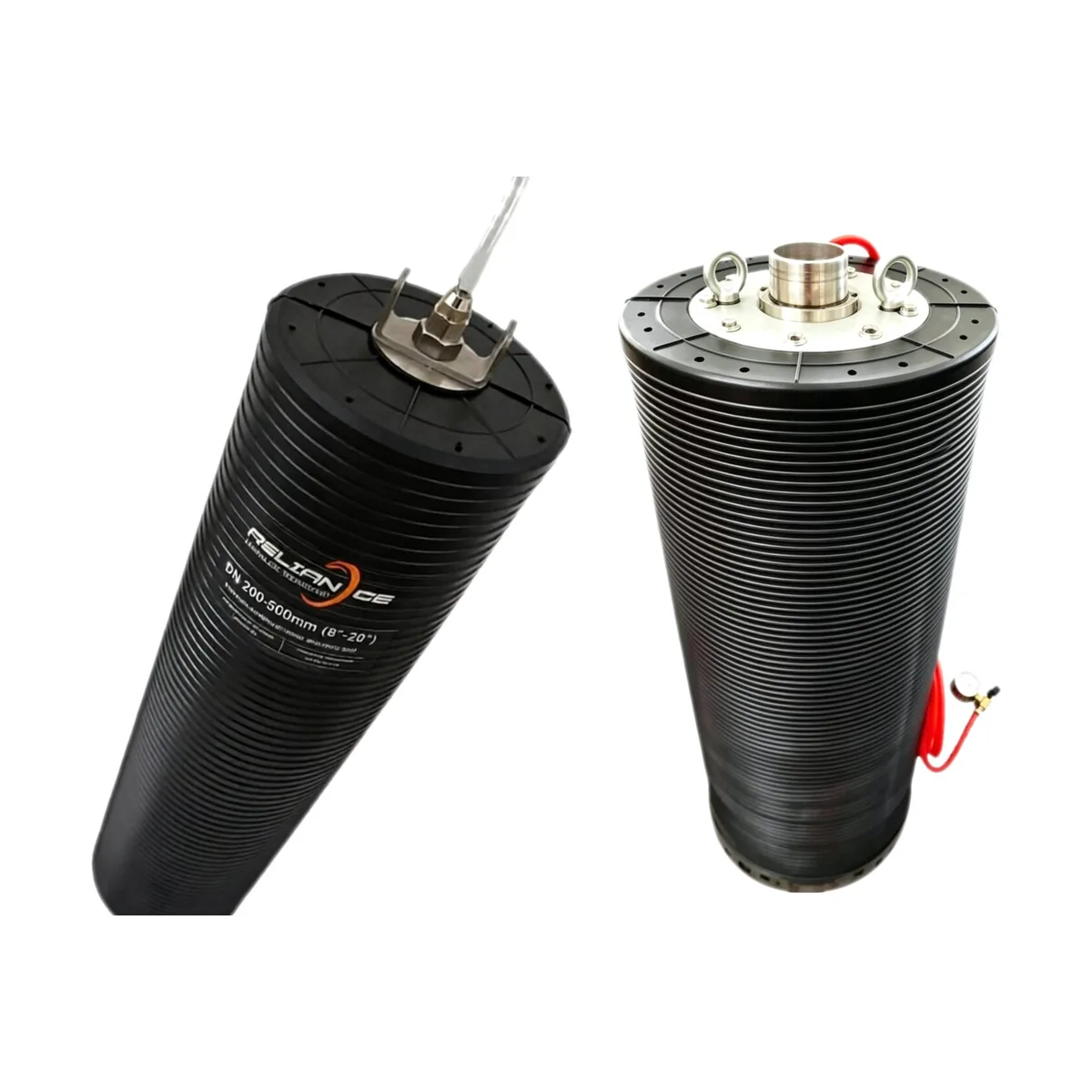
A folded pipe plug can be considered for a small opening only after the complete deflated assembly and its route to the sealing position have been checked. Keep the clear access opening, folded assembly envelope and measured pipe bore as separate records. A compactness claim does not provide all three.
For Reliance Multi-Size Pipe Plugs, this means comparing your access survey with the drawing and configuration proposed for your order. The example below explains how to read a custom-plug video title alongside a standard catalogue row without turning either into a fit approval.
Start with three separate dimensions
Prepare these records before asking whether a plug will pass through an opening:
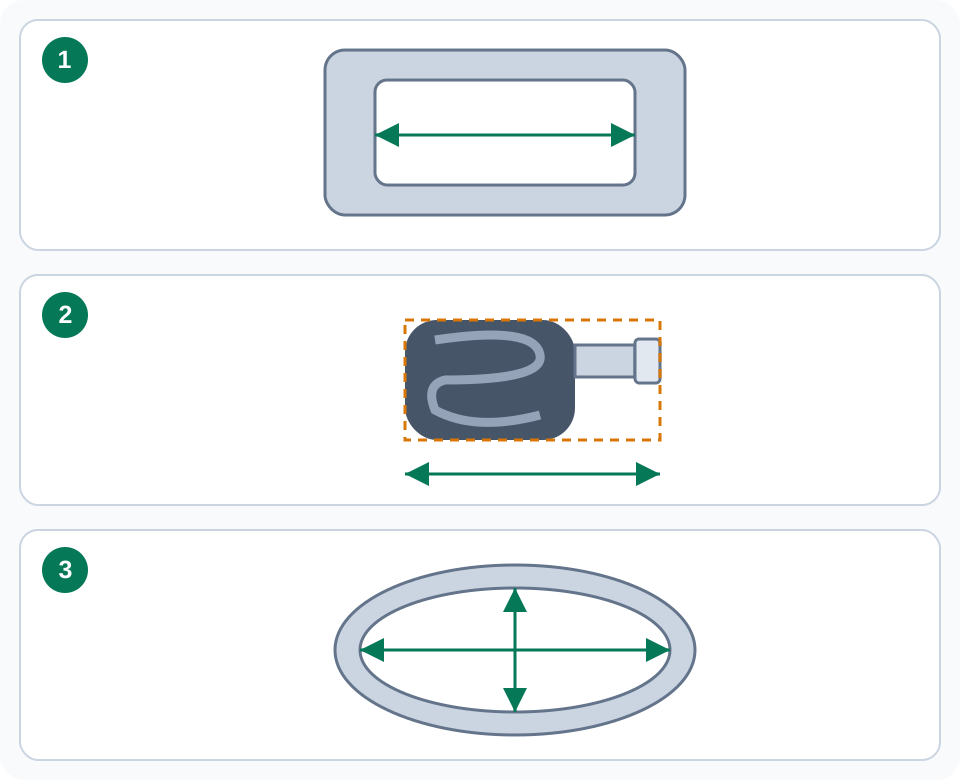
Clear opening: the usable shape and dimensions at the entry, including restrictions from the frame or other fixed features.
Complete folded envelope: the outside dimensions of the deflated assembly in the supplier's specified insertion configuration, including the fittings and accessories that must pass through with it.
Working bore: the measured internal geometry at the proposed sealing position, recorded separately from the pipe's nominal designation.
NASSCO's assessment overview, under “Laser and Sonar,” describes dimensional inspection that can quantify pipe diameter, ovality and offsets. It also highlights equipment calibration and operator training as factors in confidence in laser-profiling data. For a purchasing review, send the measurement method and location with the values; a nominal pipe label does not supply that survey.
Read the compact-plug claim in its original context
The title of Reliance's custom-plug video says “Folds Under 100mm” and identifies a DN150–DN300 pipe plug. Those are first-party title statements about a custom example. This article verifies the public title and channel attribution; it does not verify the video's footage, audio or dimensional test results.
Use the title to frame a specific enquiry: which dimension is below 100 mm, in which folded configuration, and with which fittings attached? Request a dimensioned drawing or measurement record for the proposed assembly. The title alone does not establish an approved access opening, a standard model code or the conditions under which that custom plug may be used.
The DN150–DN300 label and the under-100 mm statement refer to different descriptions in the title. Do not substitute either for the measured site opening or infer that every standard plug covering those nominal sizes has the same folded dimensions.
Compare the actual catalogue fields
The standard MS 150-300 entry is a useful document check because its size designation resembles the range in the video title. That similarity does not identify it as the custom plug.
| Record | Diameter-related field | Length field |
|---|---|---|
| Reliance brochure, page 2, MS 150-300 | Product Diameter: 135.0 mm | Total Length of Product: 550.0 mm |
| Reliance spreadsheet, row 4, MS 150-300 | Min. Inner Dia.: 135mm/5.4in. | Deflated Length: 500mm/20in. |
The brochure and spreadsheet use different diameter and length headings, and the recorded lengths differ. Neither quoted field is labelled “folded width.” Keep both records with your enquiry and ask the supplier to explain the headings and confirm the current drawing; do not relabel 135 mm as either an approved entry diameter or the measured folded width.
This comparison does not show that the custom video claim is wrong. It shows why a catalogue row and a custom example need their own configuration and measurement records.
Check the assembly and the route together
For the access review, ask the supplier to mark the limits of the whole assembly on the drawing. Identify which connections remain attached, which accessories form part of the proposed insertion configuration, and the space needed to handle that configuration. Do not assume a dimension measured across the rubber body includes a protruding connection.
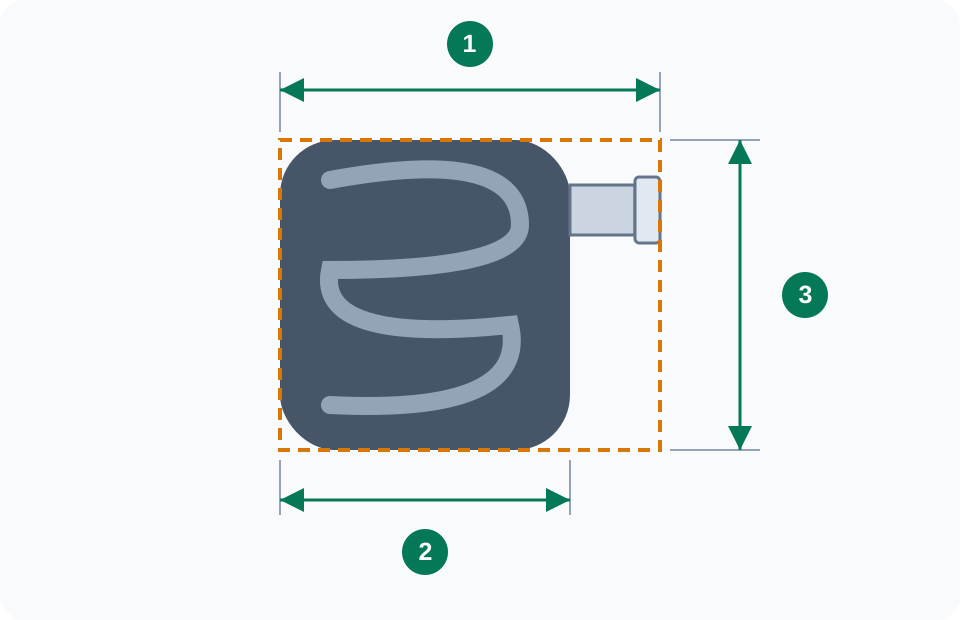
Request an assessment of the full route, including changes in direction, local restrictions and the space before the sealing position. A comparison of two widths at the entry is only one part of that review. Include a route sketch and dimensions instead of using an unscaled photograph as the sole measurement record.
NASSCO lists CCTV as a tool for identifying pipe shape, material and obstructions, while describing laser and sonar separately for detailed dimensional assessment. Use condition images to explain what is present, and identify which measurements accompany them. NASSCO — CCTV & Assessment Equipment; Laser and Sonar.
Confirm suitability beyond compactness
The UK HSE's PUWER overview calls for equipment suitable for its intended use and selection that considers working conditions and risks. It also calls for adequate information, instruction and training. These are UK work-equipment requirements, not a Reliance model approval.
Keep the access decision separate from the operating limits. Reliance's brochure, page 2, and spreadsheet list inflation pressure and back pressure in separate fields. Request the current limits and instructions for the exact configuration; compact dimensions do not establish a pressure rating. The pipe plug selection guide covers the wider selection questions.
Send an access review the supplier can evaluate
Include the following with a multi-size pipe plug enquiry:
The task, pipe material and nominal designation, plus the measured bore and condition at the intended sealing position.
The clear opening shape and dimensions, a route sketch, and measurements of bends, restrictions and handling space.
The model or custom proposal being discussed, with the source document or video link.
A request for the complete folded-envelope drawing, the required insertion configuration and any manufacturer-specified clearance.
The flow arrangement, project operating conditions and the information needed to confirm separate pressure limits.
Written confirmation of the supplied configuration, included accessories and applicable instructions.
Keep measurements, catalogue values and unconfirmed items visibly separate. The useful outcome is a documented match between the site and the proposed assembly, rather than a yes-or-no answer based on a video title.
References and source documents
Further reading
Article
Single-Size vs Multi-Size Pipe Plugs: Comparing Fit Ranges
Article
Pipe Plug vs Repair Packer: What Is the Difference?
Article
Does Every Pipeline Joint Need Sealing? Evidence for a Repair Scope
Buyer guide
How to Choose an Inflatable Pipe Plug