

Joint d’extrémité mécanique interne pour canalisations
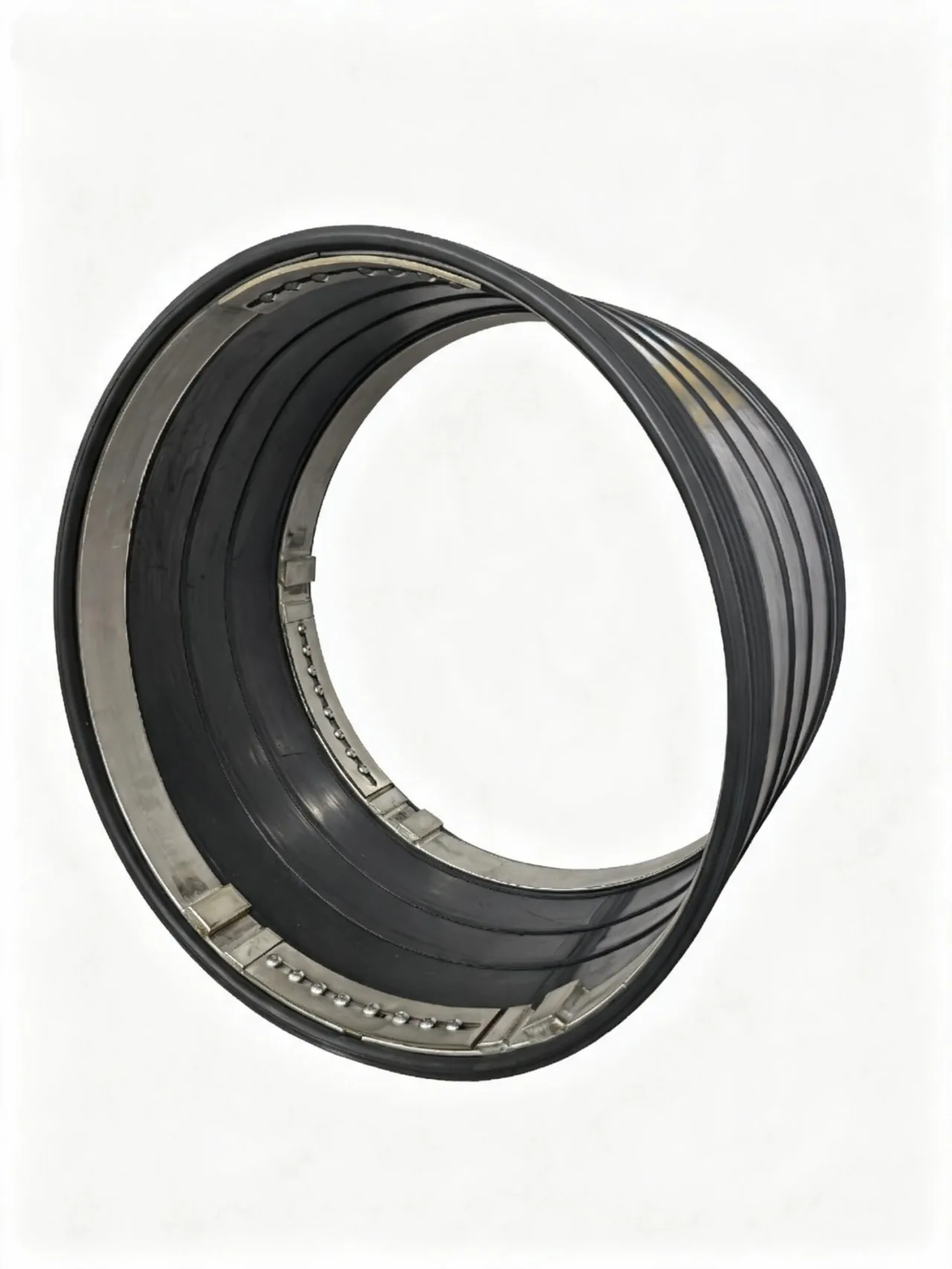
Étanchez depuis l’intérieur les extrémités des gaines CIPP et des tronçons avec un manchon EPDM et des bandes inox.
- En stock
- Tailles sur mesure
- Attestation EU TEST
Les joints d’extrémité mécaniques internes plaquent un manchon en caoutchouc EPDM contre la paroi du tuyau à l’aide de bandes d’expansion en acier inoxydable, pour étancher depuis l’intérieur les extrémités des gaines CIPP et des tronçons de tuyau, sans excavation. Mesurez le diamètre intérieur à l’emplacement du joint et confirmez les matériaux et les conditions de service avant de choisir une configuration.
Confirmez avec Reliance les dimensions, matériaux, limites de fonctionnement, documents de contrôle, disponibilité et conditions de livraison de chaque projet.
Spécifications techniques
- Largeurs de joint
- 270 / 350 / 500 mm
Outils de pose
| Article | Qté par kit |
|---|---|
| Stainless steel expansion band (slot or screw type) | 2 (more on request) |
| EPDM rubber sealing sleeve | 1 |
| Embedded fixed blocks (standard and spare) | — |
| Anti-wear gasket | — |
| Hydraulic installation tool with gauge | 1 |
| Drilling screw, drilling wrench and hexagonal wrench | — |
| Nipple tester, shovel and rubber hammer | — |
Caractéristiques issues de la liste de prix actuelle et des brochures produits de Reliance. Validez la configuration avec notre équipe avant de commander.
Guide produit
Guide technique de la brochure en anglais
Sealing the end of a lined pipe from inside
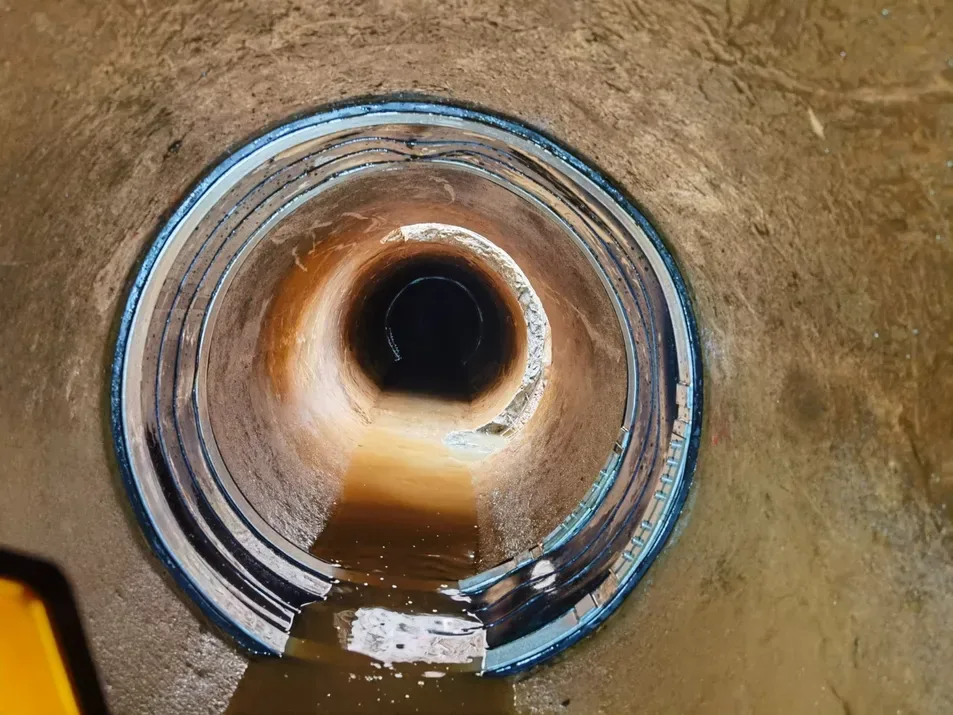
The internal pipe joint mechanical end seal is an EPDM rubber sleeve pressed against the pipe wall by stainless steel expansion bands. It is installed from inside the pipe, without excavation, where water could otherwise travel between a liner or pipe section and the host pipe.
Reliance lists the end seal for CIPP-lined pipeline rehabilitation and for sewage and potable water pipelines. The same mechanical seal system is used for internal pipe joint seals; the brochure shows it installed at the ends of a T-junction (“T-rubber system with end seals”) and as multiple sleeves along one pipe.
Materials, rubber widths and size range
The brochure prints the band material options as “AISI 304, 316L and 318L (2205)” and the rubber width options as 270, 350 and 500 mm. Confirm the required grade designation and material documentation when specifying the seal.
The published size range is DN200–DN3000, customizable to customer requirements. Reliance’s product listing names concrete, PVC, HDPE, ductile iron and vitrified clay host pipes; measure the internal diameter at the seal position, including any liner, and confirm suitability for the actual pipe and medium.
Installation kit
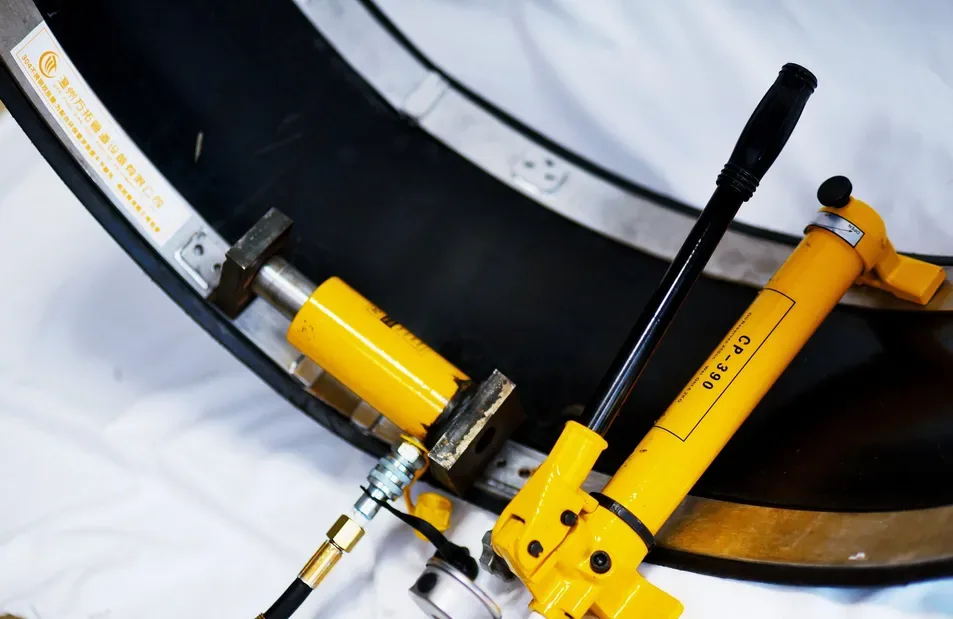
The stainless steel band is closed either by a slot type or a screw type joint. Two expansion bands are supplied per seal as standard, and more can be added on request. The bands are expanded with a hydraulic installation tool.
Hydraulic installation tool and pressure gauge.
Drilling screw, drilling wrench and hexagonal wrench.
Nipple tester, shovel and rubber hammer.
Before ordering
Send the measured internal diameter at each seal position, the liner or pipe material and thickness, the length available for the sleeve, the conveyed medium and operating conditions. Pressure ratings, service life and model details for a specific configuration are confirmed in the quotation documents.
Source: PDF · 2
Documents originaux
Consultez le guide et les caractéristiques en ligne. Les fichiers originaux restent disponibles ci-dessous.
Présentation des applications
Consultez les joints internes pour les raccords présentant des infiltrations ou des exfiltrations entre tronçons.
Étanchéité interne des jointsApplicationsDemande technique
Indiquez ces éléments dans votre demande afin que Reliance puisse examiner vos besoins.
Diamètre, matériau et défaut ou opération prévue
Produit ou modèle, dimensions et quantité
Pression, conditions de service, accès et contraintes de pose
Norme, documents de contrôle, destination et date souhaitée
Confirmez avec Reliance les dimensions, matériaux, limites de fonctionnement, documents de contrôle, disponibilité et conditions de livraison de chaque projet.
Demander un devis: Joint d’extrémité mécanique interne pour canalisations