
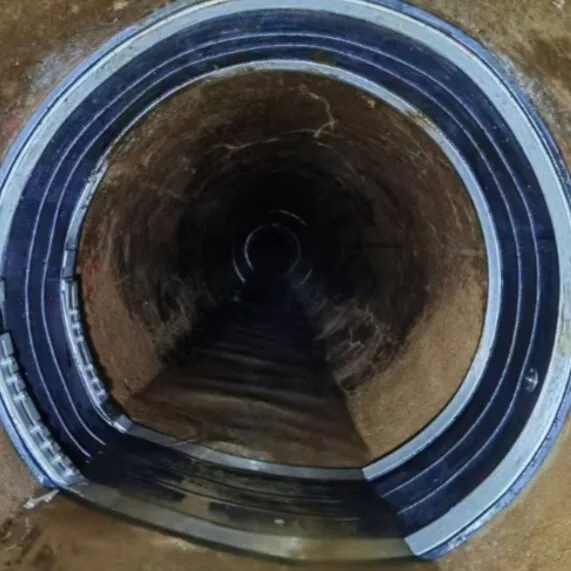
1 / 8
Étanchéité interne des joints
Joints internes pour canalisations
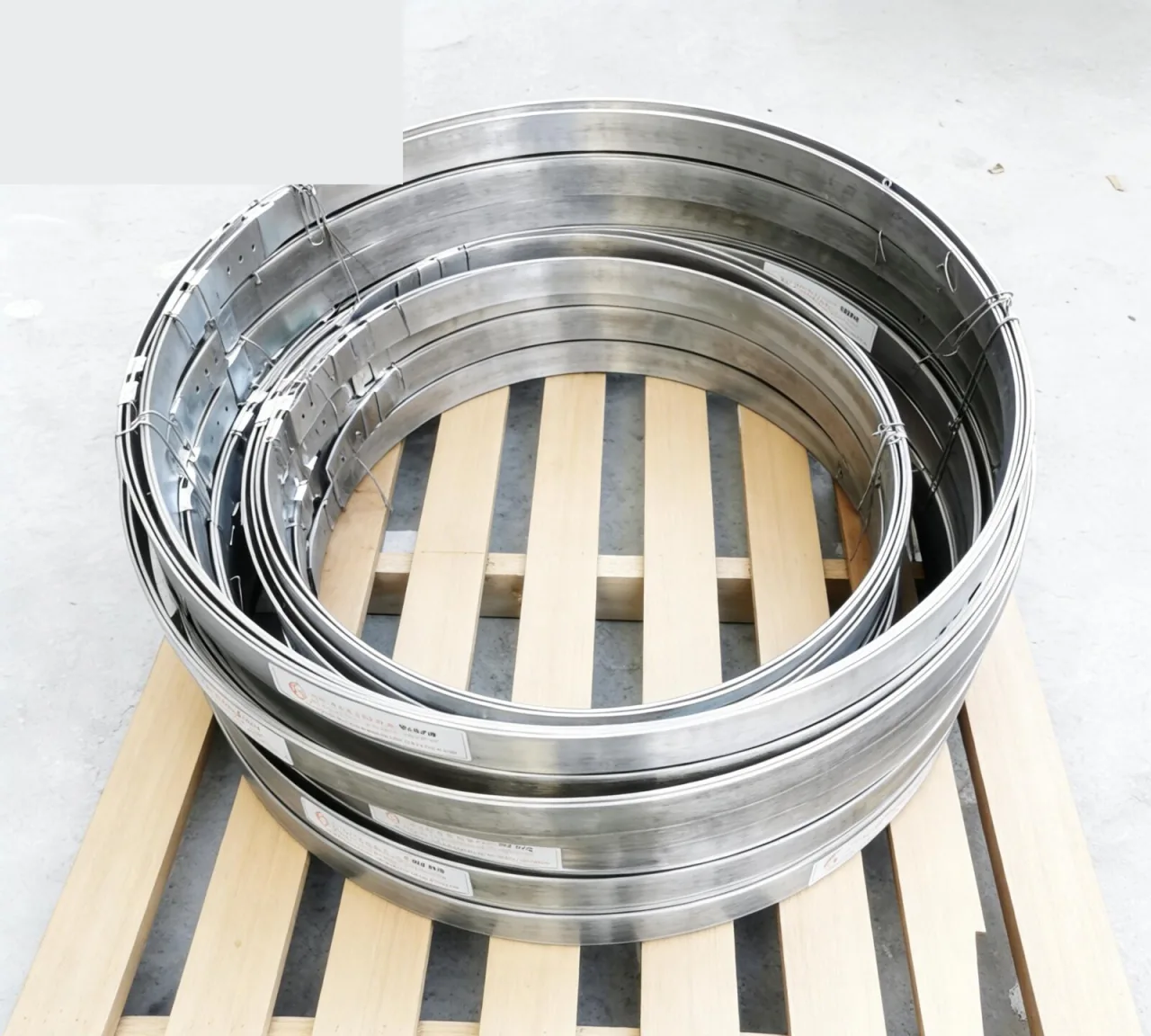
Étanchéité des raccords de tuyaux depuis l’intérieur. Comparez les bagues inox, les largeurs de caoutchouc et la pose.
- Plage de diamètres publiée
- DN150–4000(6–160″)
- Modèles publiés
- 88 modèles
- Vérifier le stock et le délai
- Tailles sur mesure
- Attestation EU TEST
Demander un devis: Joints internes pour canalisationsDemander un échantillon gratuit: Joints internes pour canalisationsTélécharger la brochure · PDFQuestionnaire avant commande (anglais)
Détails
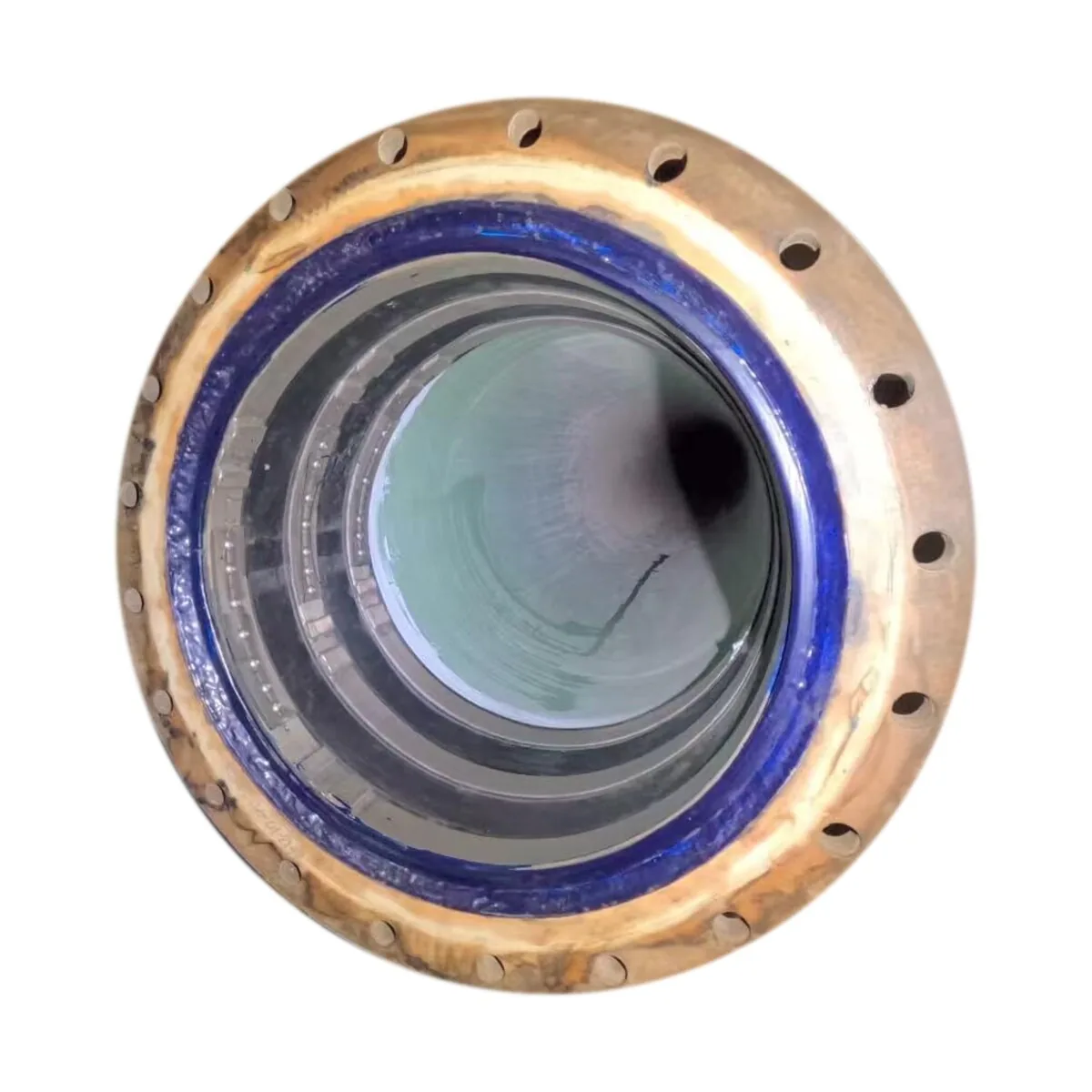
An Internal Pipe Joint Seal stops leakage at the joint between host-pipe sections from inside the pipe. It uses stainless steel sleeves, a rubber sealing element and installation accessories, with published highlights including 25 bar maximum internal pressure. Confirm the measured joint diameter and medium before ordering; Instant-Lock sleeves and factory built-in socket seals are separate products.
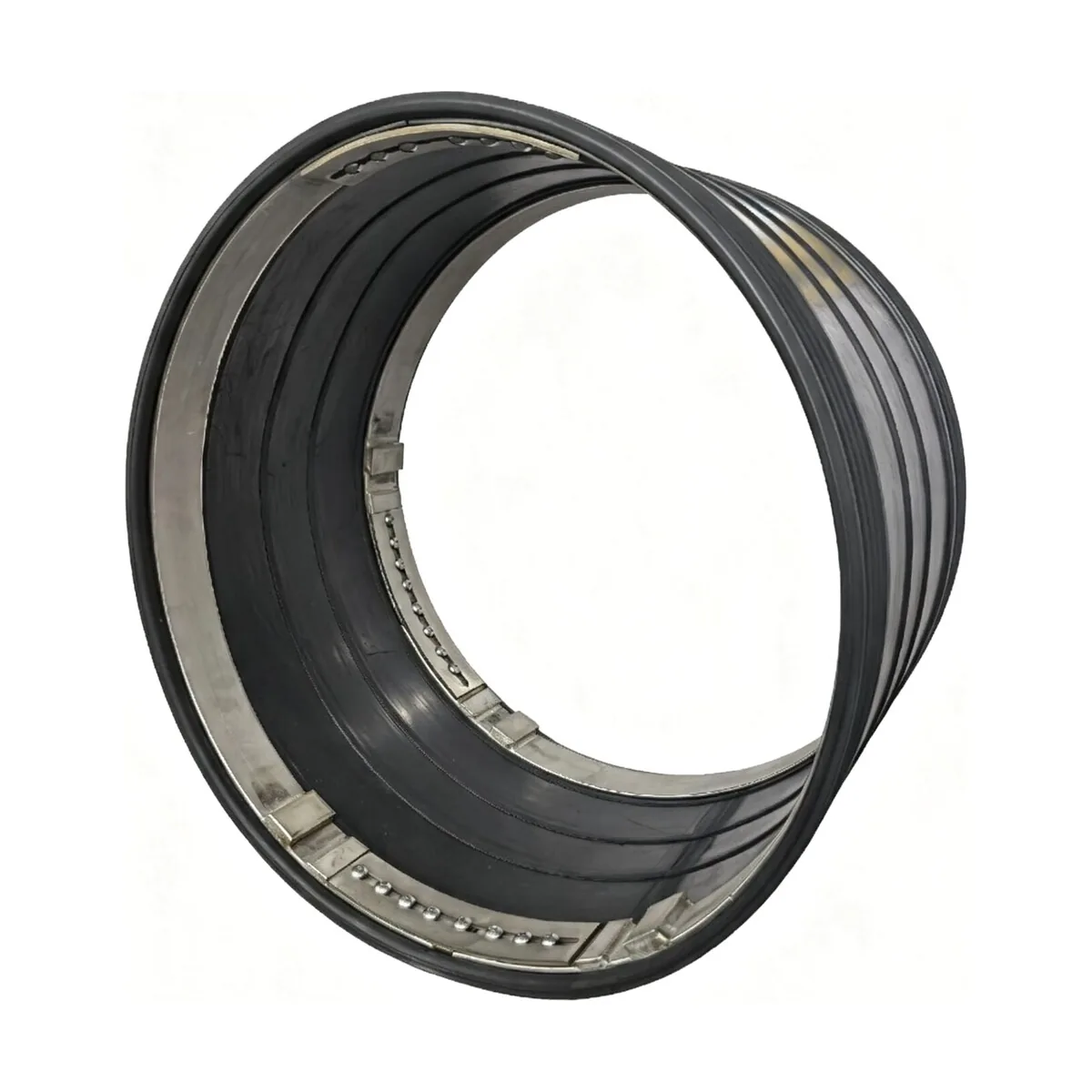
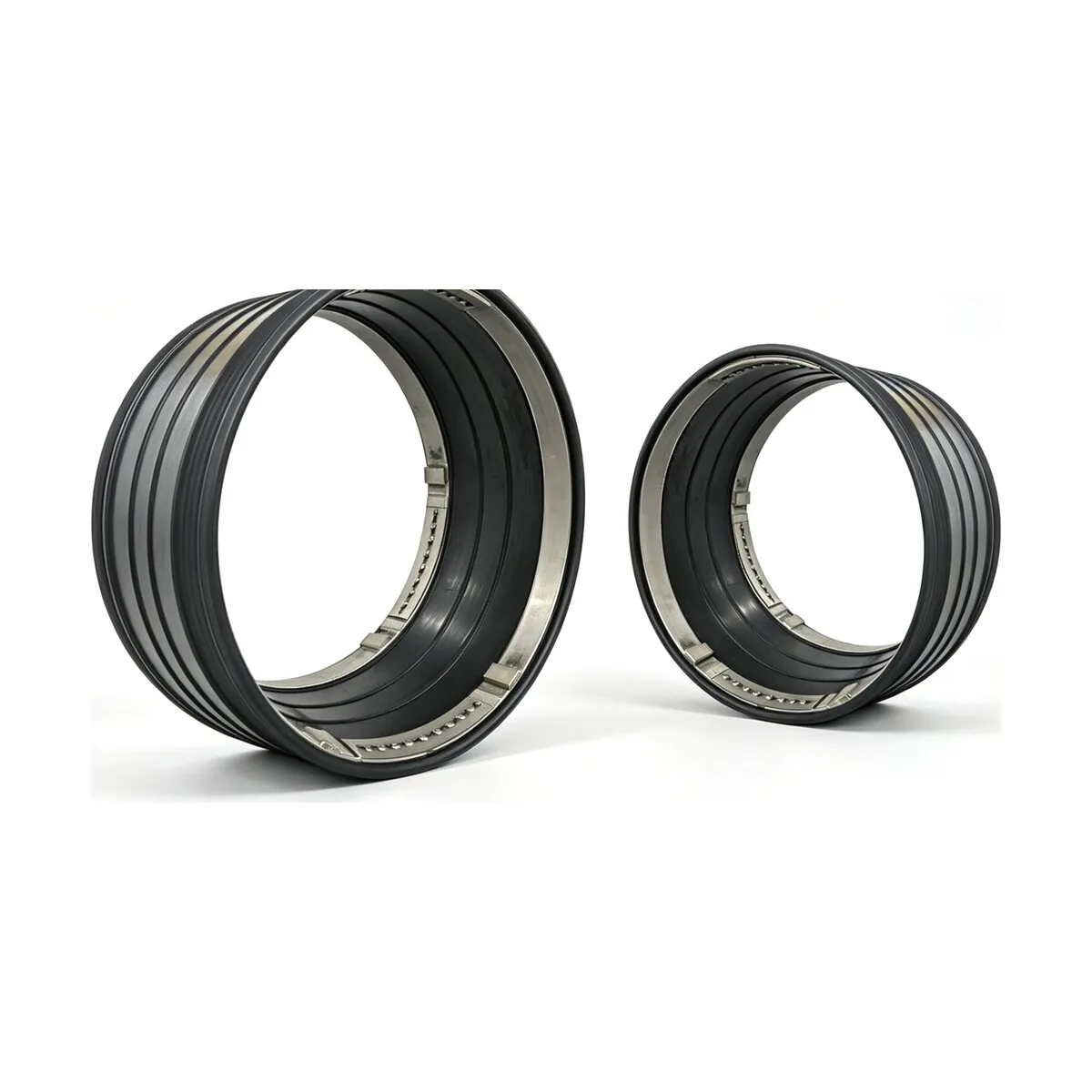
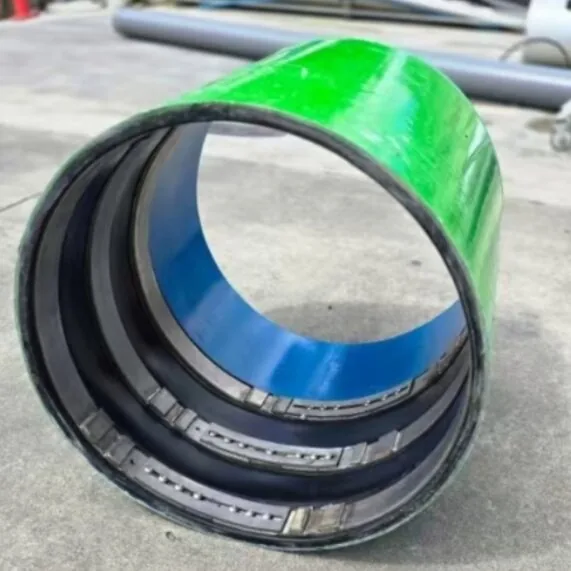
Les joints internes pour canalisations associent des bagues en acier inoxydable, un élément en caoutchouc et des accessoires de pose pour traiter les infiltrations ou exfiltrations entre sections de tuyau. Mesurez le diamètre intérieur et confirmez les matériaux et les conditions de service avant de choisir la configuration.
Confirmez avec Reliance les dimensions, matériaux, limites de fonctionnement, documents de contrôle, disponibilité et conditions de livraison de chaque projet.
Spécifications techniques
- Durée de vie du caoutchouc
- 30 ans
- Pression interne max.
- 25 bar
- Pression externe max.
- 5 bar (sur demande)
- Plage de température
- −30 … +130 °C
- Largeurs de joint
- 180 / 266 / 360 / 500 mm
- Matériaux de canalisation
- Béton, acier, fonte et amiante-ciment ; autres sur demande
- Fluides
- Eaux usées, eau potable, réseaux unitaires, eaux usées industrielles, essence, huile et gaz ; autres sur demande
Présélection uniquement. Le diamètre ne confirme pas la compatibilité : matériau, défaut, pression et accès nécessitent une validation technique.
Eaux usées (WW)
- Commun à tous les modèles
- Acier inoxydable
- 304
- Bande (é × l)
- 5 × 50 mm
| Modèle |
|---|
DW · inox 304
- Commun à tous les modèles
- Acier inoxydable
- 304
| Modèle | Bande (é × l)(mm) |
|---|---|
| 3 × 40 | |
| 3 × 40 | |
| 3 × 40 | |
| 3 × 40 | |
| 5 × 50 | |
| 5 × 50 | |
| 5 × 50 | |
| 5 × 50 | |
| 5 × 50 | |
| 5 × 50 | |
| 5 × 50 | |
| 5 × 50 | |
| 5 × 50 | |
| 5 × 50 | |
| 5 × 50 | |
| 5 × 50 | |
| 5 × 50 | |
| 5 × 50 | |
| 5 × 50 | |
| 5 × 50 |
DW · inox 316L
- Commun à tous les modèles
- Acier inoxydable
- 316L
| Modèle | Bande (é × l)(mm) | Anneaux | Segments |
|---|---|---|---|
| 4 × 40 | 2 | 2 | |
| 4 × 40 | 2 | 2 | |
| 4 × 40 | 2 | 2 | |
| 4 × 40 | 2 | 2 | |
| 5 × 50 | 2 | 2 / 4 | |
| 5 × 50 | 2 | 2 / 4 | |
| 5 × 50 | 2 | 2 / 4 | |
| 5 × 80 | 2 | 2 / 4 | |
| 5 × 50 | 2 | 2 / 4 | |
| 5 × 80 | 2 | 2 / 4 | |
| 5 × 50 | 2 | 2 / 4 | |
| 5 × 80 | 2 | 2 / 4 | |
| 5 × 50 | 2 | 2 / 4 | |
| 5 × 80 | 2 | 2 / 4 | |
| 5 × 50 | 2 | 2 / 4 | |
| 5 × 80 | 2 | 2 / 4 | |
| 5 × 50 | 2 | 2 / 4 | |
| 5 × 80 | 2 | 2 / 4 | |
| 5 × 50 | 2 | 2 / 4 | |
| 5 × 80 | 2 | 2 / 4 | |
| 5 × 50 | 2 | 2 / 4 | |
| 5 × 80 | 2 | 2 / 4 | |
| 5 × 50 | 2 | 2 / 4 | |
| 5 × 80 | 2 | 2 / 4 | |
| 5 × 50 | 2 | 2 / 4 | |
| 5 × 80 | 2 | 2 / 4 | |
| 5 × 50 | 2 | 2 / 4 | |
| 5 × 80 | 2 | 2 / 4 | |
| 5 × 50 | 2 | 2 / 4 | |
| 5 × 80 | 2 | 2 / 4 | |
| 5 × 50 | 2 | 4 | |
| 5 × 80 | 2 | 4 | |
| 5 × 50 | 2 | 4 | |
| 5 × 80 | 2 | 4 | |
| 5 × 50 | 2 | 4 | |
| 5 × 80 | 2 | 4 | |
| 5 × 50 | 3 | 6 | |
| 5 × 80 | 3 | 6 | |
| 5 × 50 | 3 | 6 | |
| 5 × 80 | 3 | 6 | |
| 5 × 50 | 3 | 6 | |
| 5 × 80 | 3 | 6 | |
| 5 × 50 | 3 | 6 | |
| — | 3 | 6 | |
| 5 × 50 | 3 | 6 | |
| 5 × 80 | 3 | 6 | |
| 5 × 50 | 3 | 6 | |
| 5 × 80 | 4 | 8 | |
| 5 × 50 | 4 | 8 | |
| 5 × 80 | 4 | 8 | |
| 5 × 50 | 4 | 8 | |
| 5 × 80 | 4 | 8 |
Pour l'eau de mer, les mêmes manchettes sont fabriquées en acier inoxydable duplex 2205.
Dimensions manchette et caoutchouc
| Taille | Diamètre nominal(in) | Épaisseur de paroi(mm) | Largeur de bande(mm) | Longueur du caoutchouc(mm) | Largeur du caoutchouc(mm) | Épaisseur du caoutchouc(mm) | Épaisseur joints inclus(mm) |
|---|---|---|---|---|---|---|---|
| DN200 | 8 | 3/4/5 | 30/40/50 | 581 | 350 | 6 | 13.2 |
| DN300 | 12 | 3/4/5 | 30/40/50 | 895 | 350 | 6 | 13.2 |
| DN400 | 16 | 3/4/5 | 30/40/50 | 1209 | 350 | 6 | 13.2 |
| DN500 | 20 | 3/4/5 | 30/40/50 | 1523 | 350 | 6 | 13.2 |
| DN600 | 24 | 3/4/5 | 30/40/50 | 1821 | 270 / 350 | 6 / 8 | 13.2 / 15.2 |
| DN800 | 32 | 5 | 50 | 2411 | 270 / 350 | 6 / 8.0 | 13.2 / 15.2 |
| DN1000 | 40 | 5 | 50 | 3039 | 270 / 350 | 6 / 8.0 | 13.2 / 15.2 |
| DN1200 | 48 | 5 | 50 | 3667 | 270 / 350 | 6 / 8.0 | 13.2 / 15.2 |
| DN1350 | 54 | 5 | 50 | 4138 | 270 / 350 | 6 / 8.0 | 13.2 / 15.2 |
| DN1400 | 56 | 5 | 50 | 4295 | 270 / 350 | 6 / 8.0 | 13.2 / 15.2 |
| DN1500 | 60 | 5 | 50 | 4609 | 270 / 350 | 6 / 8.0 | 13.2 / 15.2 |
| DN1800 | 72 | 5 | 50 | 5551 | 270 / 350 | 6 / 8.0 | 13.2 / 15.2 |
Outils de pose
| Article | Plage de diamètres(mm) | Hauteur × course(mm) | Dimensions de l'emballage(mm) | Poids brut(kg) | Volume(ml) |
|---|---|---|---|---|---|
| Installation tool – Smallest | 150 | 60 × 26 | 535 × 170 × 170 | 10 | — |
| Installation tool – Small | 200–500 | 104 × 50 | 535 × 170 × 170 | 10 | — |
| Installation tool – Large | 600+ | 200 × 100 | 580 × 240 × 240 | 19 | — |
| Sealant | — | — | — | — | 300 |
Caractéristiques issues de la liste de prix actuelle et des brochures produits de Reliance. Validez la configuration avec notre équipe avant de commander.
Fonctionnement dans la conduite
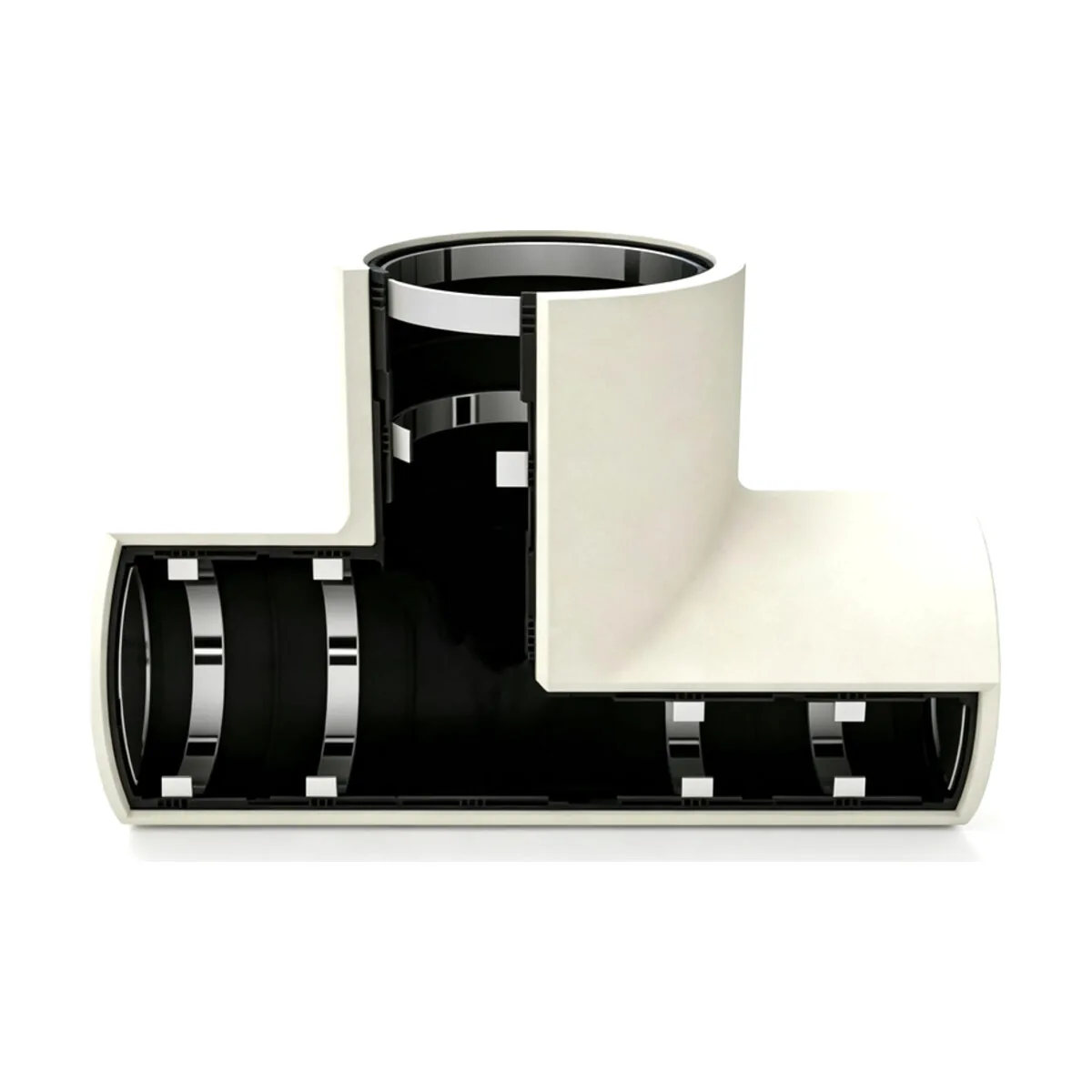
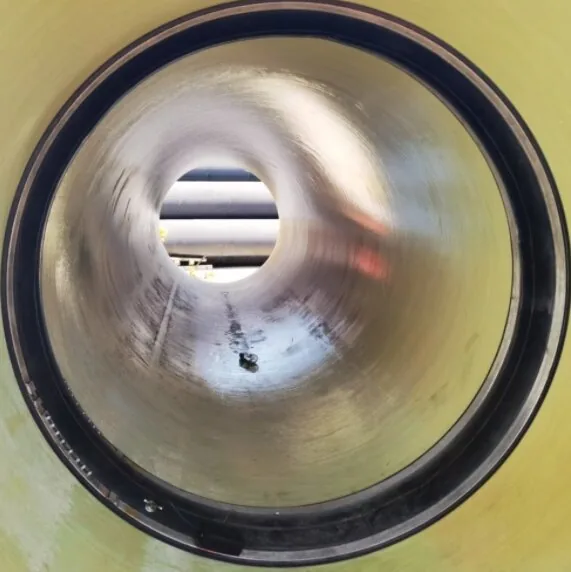
Coupe d’une conduite enterrée : un manchon en caoutchouc à deux bandes d’acier est expansé sur un joint qui fuit.
Illustration simplifiée, pas à l’échelle. Sélectionnez selon le diamètre intérieur mesuré et le tableau des modèles.
Guide produit
Guide technique de la brochure en anglais
An internal pipe joint seal closes a leaking joint from inside the pipe. If the sewer survey shows damage beyond that joint, compare trenchless sewer repair methods before you specify only a joint seal.
Sealing a pipe joint from inside
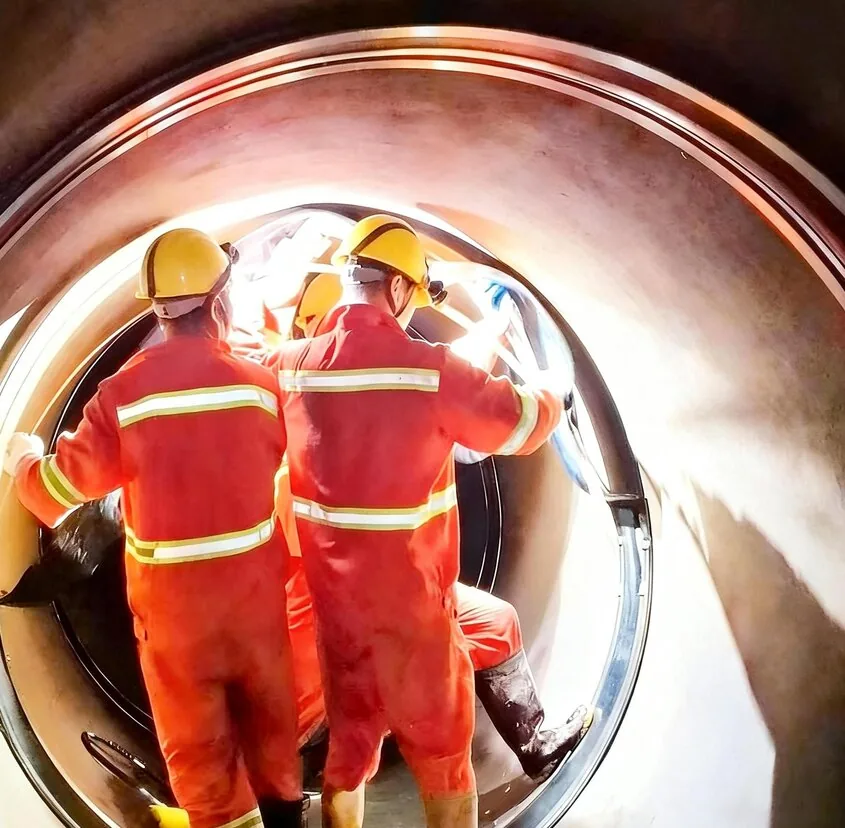
An Internal Pipe Joint Seal is installed from inside the host pipe to seal a leaking joint. This internal pipe seal is an internal joint seal for the joint between pipe sections. It is not an Instant-Lock repair sleeve and it is not a factory built-in socket seal. It combines stainless steel sleeves, a rubber sealing element and installation accessories where infiltration or exfiltration is present. Measure the internal pipe diameter before selecting a configuration.
The brochure describes applications in sewage, drinking-water, steam, seawater, chemical and oil pipelines. Material selection and suitability need to be confirmed for the actual medium and service conditions.
| Term | What it refers to | Reliance product |
|---|---|---|
| Internal joint seal (internal seal) | A seal fitted from inside an existing pipe to close a leak at the joint between two pipe sections. | This product; select the WW or DW table |
| Built-in socket seal | A gasket formed or fitted into a socket when the pipe is manufactured, not a seal installed later from inside the pipe. | Not this product |
| Instant-Lock repair sleeve | A stainless-steel sleeve with an EPDM jacket placed over a local crack or defect in the pipe wall. | A different product: Instant-Lock Small or Large |
| Full-length CIPP liner | A resin-impregnated liner cured against a continuous length of host pipe. | Not supplied by Reliance |
Ring configurations and rubber widths
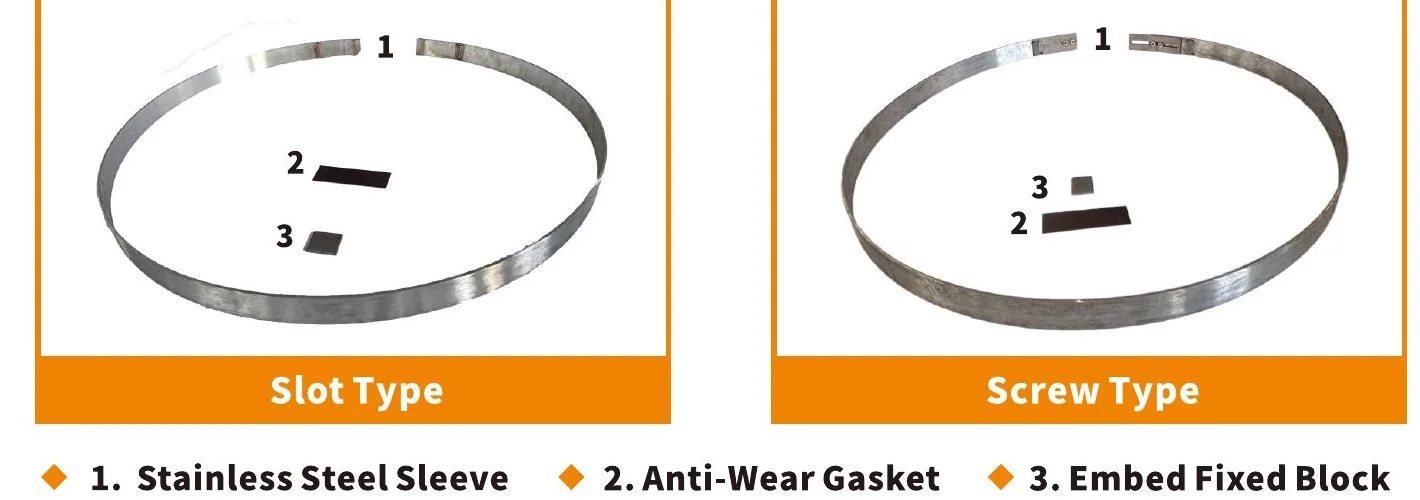
The brochure shows slot-type and screw-type stainless steel sleeve assemblies. Both diagrams identify a stainless steel sleeve, an anti-wear gasket and an embedded fixed block.
Published rubber-width options are 270, 350 and 500 mm. The model tables below publish the current WW and DW rows from DN150 to DN4000. Separate tables list waste-water (WW) models and DW models in 304 and 316L. A model name such as WW 600-350 or DW 200-270 pairs a nominal size with a rubber width; confirm that row against the measured internal diameter. Request a dimensioned drawing to confirm the width definition for the proposed model.
The model tables below list 304 and 316L grades. Confirm any other project grade and the required material documentation with Reliance; request a dimensioned drawing for the proposed model.
Installation equipment
Measure the internal pipe diameter before ordering. The brochure illustrates hydraulic installation equipment and the following accessories. This is a published equipment list, not a confirmed standard supply package. Request an itemized quotation identifying the seal assembly and installation equipment included, optional tools or accessories, and items to be supplied on site.
Installation tools and pressure gauge.
Drilling screw, drilling wrench and hexagonal wrench.
Nipple tester, shovel and rubber hammer.
Middle East / GCC enquiries
The Dubai office coordinates regional enquiries: TH65 Alandulus, Jumeirah Golf Estate, Dubai, United Arab Emirates. Internal pipe joint seals are manufactured in China. Reliance is headquartered in Wenzhou, with manufacturers in Qingdao.
Qatar, Saudi Arabia and the United Arab Emirates are listed customer countries. Send enquiries for those destinations, and for other countries, to sales@reliancetrenchless.com or WhatsApp +86 188 6774 8857. Reliance exhibited at Trenchless Middle East 2024, Dubai, UAE.
Export orders are wrapped, labelled and crated on pallets. Air freight is fast air cargo for urgent or time-sensitive orders; sea, land and rail are also published routes. Availability and delivery are confirmed per project.
Measured internal diameter at the joint, plus nominal DN if known.
Whether the leak is infiltration or exfiltration, and the pipe material.
The conveyed medium. The brochure describes sewage, drinking-water, steam, seawater, chemical and oil pipelines; confirm suitability for the actual service.
Ring arrangement if known (slot-type or screw-type) and rubber width. Published rubber-width options are 270, 350 and 500 mm; confirm the width and dimension definition against the dimensioned drawing for the proposed model.
WW or DW model if known, such as WW 600-350 or DW 200-270. The number in the model name does not replace the measured internal diameter.
The material grade to confirm. The WW and DW tables on this page list 304 and 316L; confirm any other project grade with Reliance.
Destination country or port, the target date, and whether the order is urgent (air freight) or standard (sea).
Frequently asked questions about internal pipe joint seals
What is an internal pipe joint seal?
An internal pipe joint seal on this page is an internal seal installed from inside the host pipe at the joint between pipe sections. This internal pipe seal combines stainless steel sleeves, a rubber sealing element and installation accessories.
It seals the joint between host-pipe sections. CIPP liner ends use the separate internal pipe end seal.
Is an internal joint seal the same as an Instant-Lock repair sleeve?
No. An internal joint seal is for leakage at the joint between pipe sections. Instant-Lock repair sleeves are localized internal pipe repair sleeves with their own dimensions and installation arrangements.
A shared word such as seal does not make the products interchangeable. The comparison guide records the observed joint or defect, the proposed assembly and the evidence still needed. It does not select a model.
Are built-in pipe seals the same as this internal joint seal?
No. Built-in pipe seals, also called factory-integrated socket seals, are formed into a pipe socket when the pipe is manufactured. This page does not describe that product.
An internal pipe joint seal here is a rehabilitation assembly. It is installed from inside an existing host pipe to seal a leaking joint between pipe sections. Select it from the published rubber widths and the WW or DW model tables after measuring the internal diameter. It is not a factory built-in socket seal, and it is not a gasket molded into a new pipe.
What should I measure before ordering an internal joint seal?
Measure the internal pipe diameter before ordering. Nominal DN alone does not confirm the measured internal diameter, the usable seating area or the configuration.
Published rubber-width options are 270, 350 and 500 mm. The model tables on this page publish the current WW and DW rows from DN150 to DN4000. WW and DW tables are separate. Confirm a model such as WW 600-350 or DW 200-270 against the measured diameter rather than the number in the model name.
What should an internal joint sealing enquiry include?
Availability and delivery are confirmed per project, not on this page.
Measured internal diameter at the joint, plus nominal DN if known.
Whether the leak is infiltration or exfiltration, and the pipe material.
The conveyed medium. The brochure describes sewage, drinking-water, steam, seawater, chemical and oil pipelines; confirm suitability for the actual service.
Ring arrangement if known (slot-type or screw-type) and rubber width (270, 350 or 500 mm).
WW or DW model name if you already have one from the tables on this page, such as WW 600-350 or DW 200-270. The number in the model name does not replace the measured internal diameter.
The material grade to confirm. The WW and DW tables on this page list 304 and 316L; confirm any other project grade with Reliance.
Access constraints and destination.
Source: PDF · 1–2
Études de cas
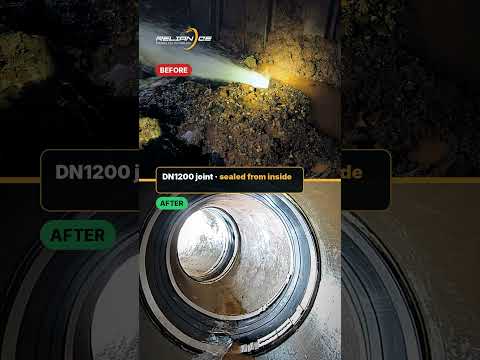
Photos et vidéos de projets issues des commandes et installations Reliance.
Vidéos explicatives
3

Formats courts
5



Documents originaux
Consultez le guide et les caractéristiques en ligne. Les fichiers originaux restent disponibles ci-dessous.
EU TEST a vérifié les dossiers techniques de six de nos groupes de produits au regard de la législation et des normes UE indiquées. Il s’agit d’attestations volontaires, et non de certificats d’organisme notifié.
Guides d’achat
Présentation des applications
Consultez les joints internes pour les raccords présentant des infiltrations ou des exfiltrations entre tronçons.
Étanchéité interne des jointsApplicationsDemande technique
Indiquez ces éléments dans votre demande afin que Reliance puisse examiner vos besoins.
Diamètre, matériau et défaut ou opération prévue
Produit ou modèle, dimensions et quantité
Pression, conditions de service, accès et contraintes de pose
Norme, documents de contrôle, destination et date souhaitée
Confirmez avec Reliance les dimensions, matériaux, limites de fonctionnement, documents de contrôle, disponibilité et conditions de livraison de chaque projet.
Demander un devis: Joints internes pour canalisations