
Manhole Rehabilitation Equipment: Pumps, Mixers and Spray Heads
Reliance Trenchless Technology
Updated
Compare Manhole Rehabilitation Equipment in the Reliance mortar sprayer catalogue: worm pumps P60/120 and P90/160, and spray systems RSS-HT and RSS-SP. Review the pump, mixer and spray head together, and keep each catalogue field with its named configuration.
This guide explains equipment roles and configuration records. It is not a connection drawing, electrical installation guide, material recipe, coverage calculation or statement that every component is supplied as one fixed kit. Product descriptions and catalogue fields are first-party records, not project approvals. Review questions and blank worksheets are editorial aids. NASSCO is cited only for the described industry methods or assessment context. Published pump, mixer and spray-head fields do not include a trailer package or a rental rate.
1. Start with the three system functions
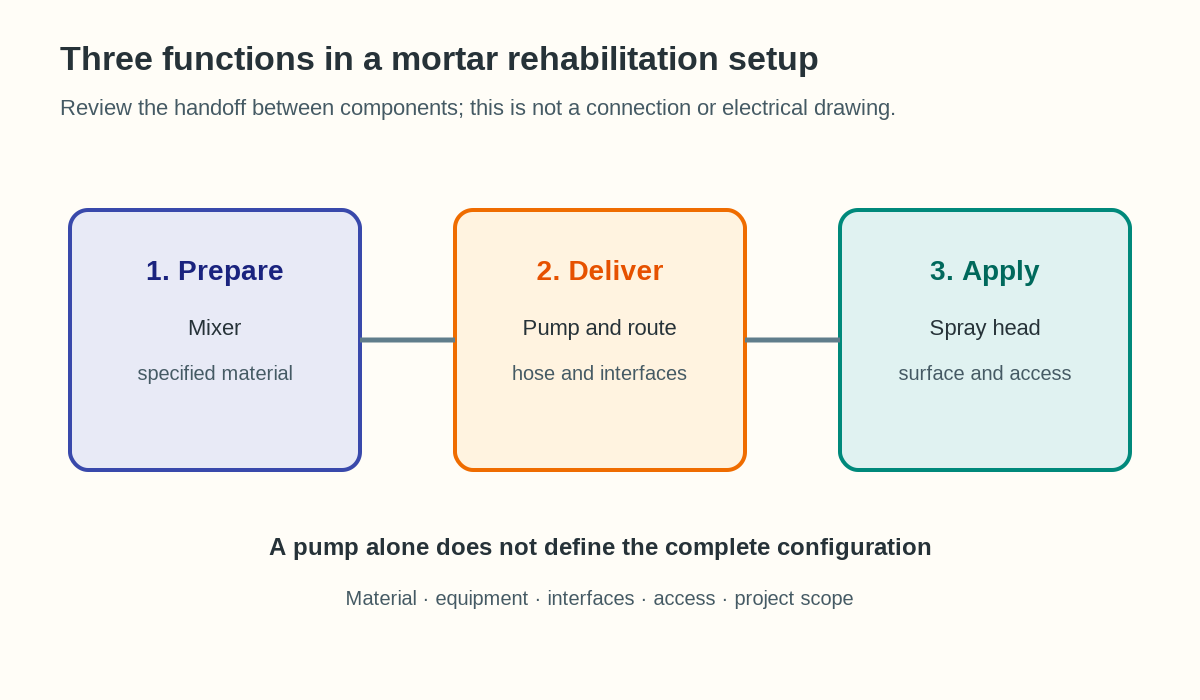
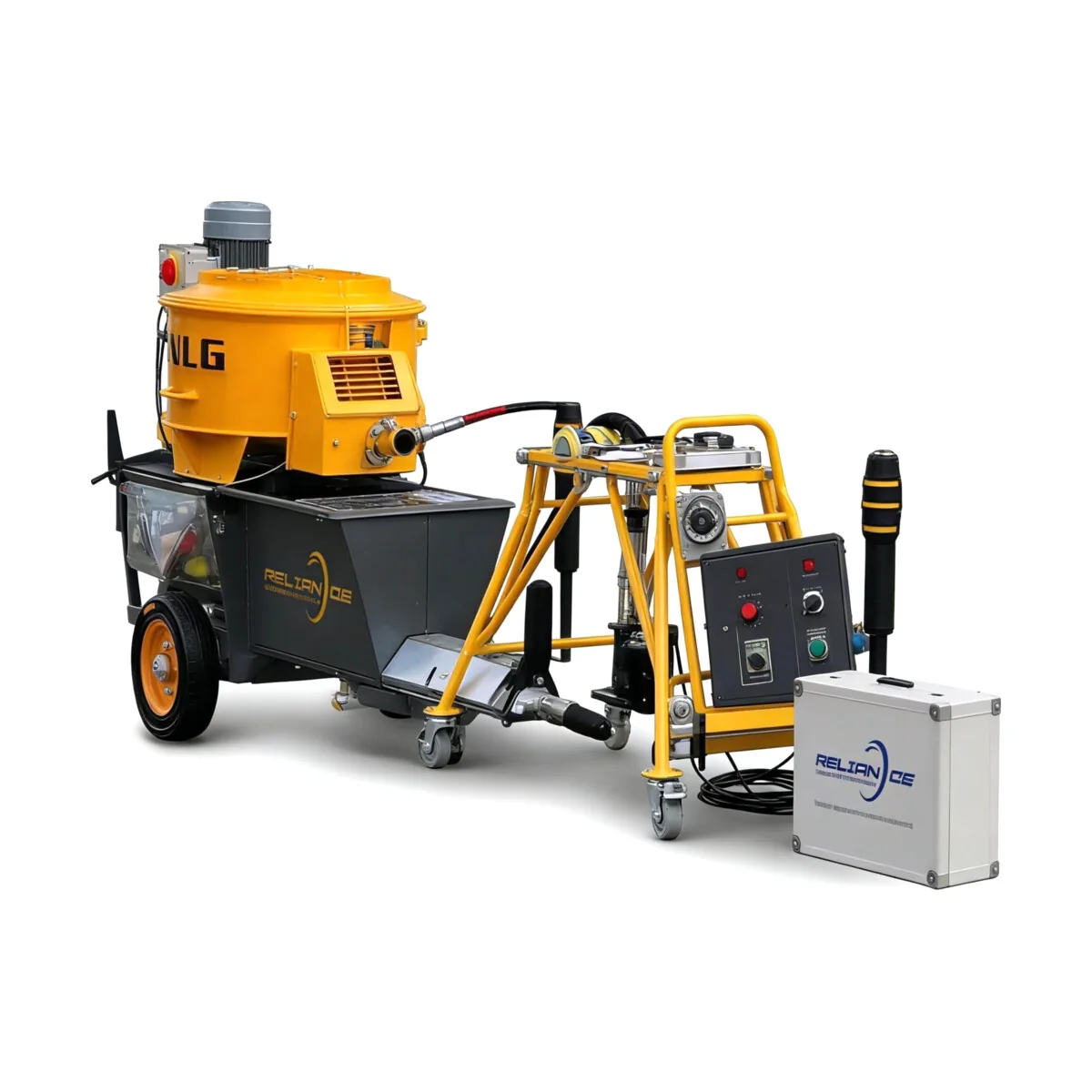
This comparison covers Manhole Rehabilitation Equipment for a proposed mortar application. A complete setup has three stages: material preparation, material delivery and material application. The mixer prepares the specified material, the pump moves it through the delivery route, and the spray head applies it at the work area. The published pump configurations are P60/120 and P90/160; the published spraying systems are RSS-HT and RSS-SP.[3][4]
Reliance describes its mortar sprayer system for inspection wells, pipelines, box culverts and underground concrete structures. That application description establishes the product context; it does not make every mortar, hose route or surface condition compatible.[3]
NASSCO’s manhole-rehabilitation overview describes cementitious coatings applied by low-pressure spraying or troweling, separately from other rehabilitation methods. This guide addresses equipment for a proposed mortar application; the equipment specification does not select the coating material or its required thickness.[2]
2. Read pump specifications as pump information

The Reliance spreadsheet separates the P60/120 and P90/160 pump configurations under “WormPump” from the RSS-HT and RSS-SP entries under “Spraying System”. Keep the pump drive, mixer drive, delivery and electrical fields with their named pump configuration, and the head fields with their named spraying-system entry.[4]
A maximum output value is not automatically the production rate for every mortar, hose length, lift, nozzle or surface. Do not convert a catalogue maximum into a site coverage promise or a per-hour estimate.
Keep the source label with each value. The worm-pump source also retains both “Weight” and “Net weight” labels with different entries; do not merge them into one unqualified number.[4]
Sources and supporting product information
Reliance Mortar Sprayer System spreadsheet — separate WormPump and Spraying System sheets3. Match mixing equipment to the specified material
First identify the material category and its own preparation requirements. The product guide lists base coats, fireproofing mortars, lime-cement mixes, self-leveling mortars, insulation coatings, grouting materials, texture coatings and concrete-repair mortars among the described categories.[3]
That list is a source description, not a universal compatibility approval. The material supplier or project specification must define the mix, preparation and application conditions. This guide does not provide a water ratio, mixing time or additive instruction.
Record who supplies the material, who supplies the mixer and which document connects the material to the proposed equipment.
Sources and supporting product information
Reliance Mortar Sprayer System brochure — applications and equipment descriptions4. Review the spray head with the access and surface
The spray head is the application end of the system. Review its power, speed, dimensions and mounting or support arrangement alongside the available work area and the project surface. A spray-head dimension is not automatically a coverage diameter or a permitted coating thickness.
The brochure shows an RSS-HT spinning head and slide-rail arrangements. The spreadsheet lists RSS-HT and RSS-SP separately, with “Feeding feature” entries of “Hollow” and “Side”. Keep these configuration labels, the spraying-diameter field and the head dimensions separate when comparing a quotation.[3][4]
Ask for the arrangement that applies to the quoted system, including any bracket, hose or support item needed at the work area.
5. Review the complete configuration
Use one line per functional component and record whether it is included, optional or supplied by the contractor. A brochure illustration can show a relationship between components without being a connection instruction or a complete bill of materials.
Confirm the power supply, material route, hose and fitting interfaces, support arrangement, accessories and document set separately. Do not infer a supplied item from a photograph or from a product family name.
| Component | Role | Specification to examine | Project condition | Included or separately supplied |
|---|---|---|---|---|
| Mixer / material preparation | Prepare the specified material | Drive, capacity and material instructions | Material and preparation method | Blank |
| Mortar pump | Deliver material through the route | Pump configuration, delivery and pressure fields | Hose route, length and access | Blank |
| Spray head | Apply material at the work area | Head type, power, speed and dimensions | Surface, access and support | Blank |
| Hoses and fittings | Connect the material route | Sizes, interfaces and length | Proposed layout and restrictions | Blank |
| Power and controls | Supply and control the equipment | Voltage, drive and control arrangement | Site power and responsible party | Blank |
| Project support | Prepare, manage and inspect the work | Required method and records | Owner and contractor scope | Blank |
6. An illustrative configuration review
For an inspection-well rehabilitation proposal, list the material preparation equipment, the pump, the spray head, support or access equipment, delivery route and project-provided items. Then attach the product source and mark every unknown interface.
This is an illustrative example, not a measured project result, coating specification or fixed Reliance package. It helps a buyer find missing scope before comparing quotations.
Frequently asked questions about manhole rehabilitation equipment
What manhole rehabilitation equipment does this guide compare?
It compares Reliance mortar-sprayer catalogue configurations used for manhole rehabilitation: worm pumps P60/120 and P90/160 under the spreadsheet heading “WormPump”, and spraying systems RSS-HT and RSS-SP under “Spraying System”. The mixer, pump and spray head remain separate stages. These published names are pump and spray-head records, not a trailer package or a rental rate.[3][4]
What is included, and what does the contractor supply?
Record each component as included, optional or supplied by the contractor. A brochure illustration can show how parts relate without being a connection instruction or a complete bill of materials. Hoses, fittings, power, support and the coating material can sit outside the named pump or spray-head row.
How should I compare P60/120, P90/160, RSS-HT and RSS-SP?
Keep pump drive, mixer drive, delivery and electrical fields with the named pump configuration. Keep the feeding feature, spraying-diameter field and head dimensions with RSS-HT or RSS-SP. The spreadsheet lists feeding features “Hollow” and “Side” for those spraying systems. A catalogue maximum output is not a site production rate.[3][4]
How do I ask for a configuration review?
Open the mortar sprayer system page for the published tables, then send the specified material, the access conditions and the pump and spray-head names you are comparing.
What to include in your enquiry
Send the information you have and identify what still needs measurement or confirmation. A requested delivery date is a requirement to review, not a promised lead time.
Specified material and its source instructions.
Preparation or mixer equipment and who supplies it.
Pump configuration, source headings and documented operating fields.
Spray head type, support arrangement and project access conditions.
Hoses, fittings, power and control items with interfaces recorded.
Included, optional and contractor-provided items.
Project surface, inspection records and acceptance documents.
Related product pages
The primary button preselects Manhole Mortar Sprayer & Spin-Cast Equipment as a discussion starting point; it does not confirm suitability. The contact form displays the available submission method and result. The email draft appears on the page for review and copying; it does not confirm delivery.
Sources and supporting product information
- Reliance manhole mortar sprayer: pump, mixer and spray-head information
- NASSCO — Manhole Rehabilitation: cementitious and polymer coating systems
- Reliance Mortar Sprayer System brochure — applications and equipment descriptions
- Reliance Mortar Sprayer System spreadsheet — separate WormPump and Spraying System sheets