Custom DN5500 Pipe Plugs: From Project Brief to Design Review
Technical review checklist for custom DN5500 inflatable pipe plugs. Calculate hydrostatic thrust, access hatch envelope, and required submittals.
By Reliance Trenchless Technology4 min read
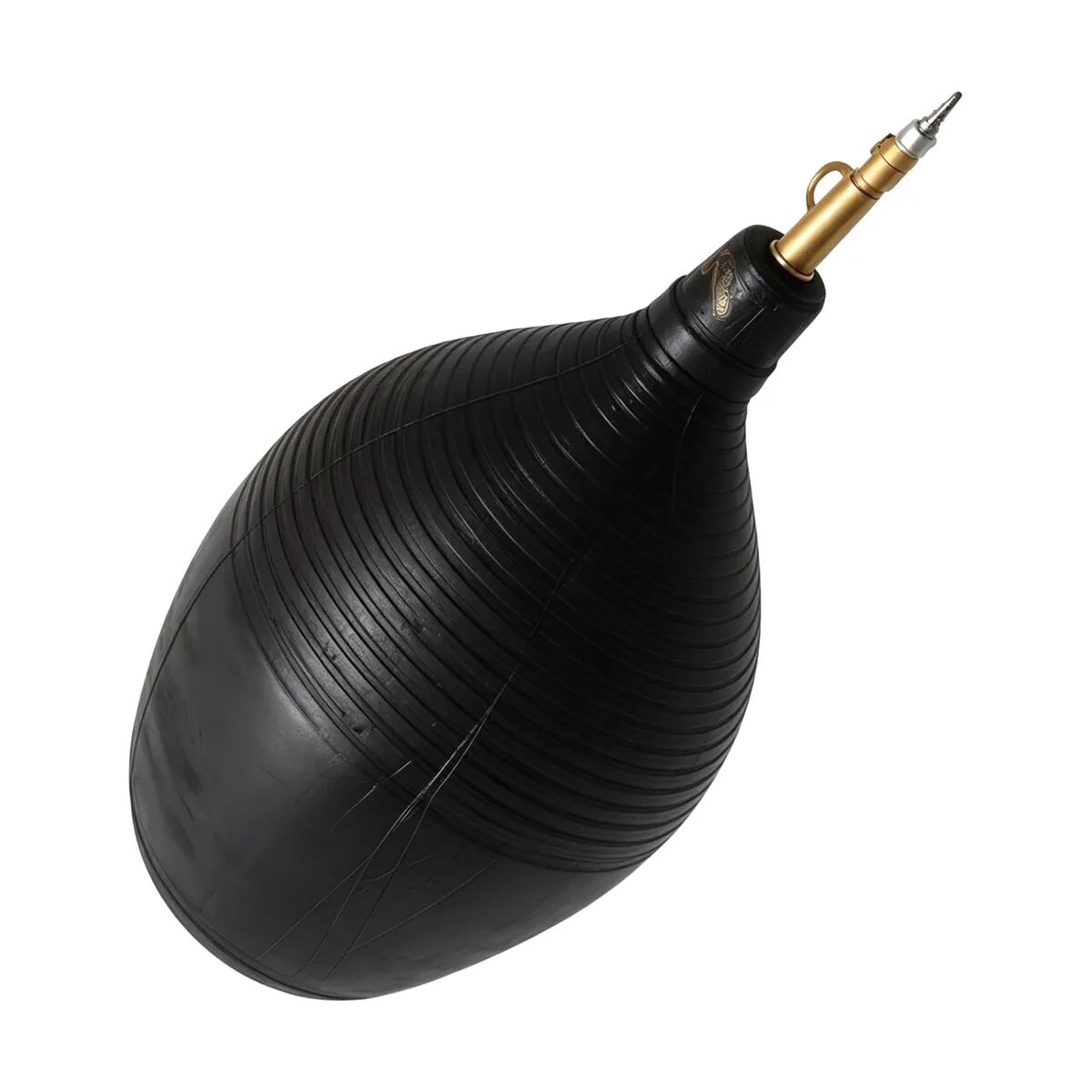
Sealing an outfall conduit or cooling water intake pipe measuring 5.5 meters (18 feet) across is fundamentally different from isolating standard municipal sewer mains. At this scale, an inflatable pipe plug ceases to be a handheld maintenance accessory and becomes a multi-tonne hydraulic barrier.
In our project record featured in the Reliance Custom DN5500 Pipe Plug Video, two custom units were engineered and manufactured for a major municipal culvert project in Abu Dhabi within a 15-day production window. But before any custom build of our Single-Size Inflatable Pipe Plugs begins, contractors and consultant engineers must submit and review specific technical criteria.
The DN5500 project scale and hydrostatic force calculation
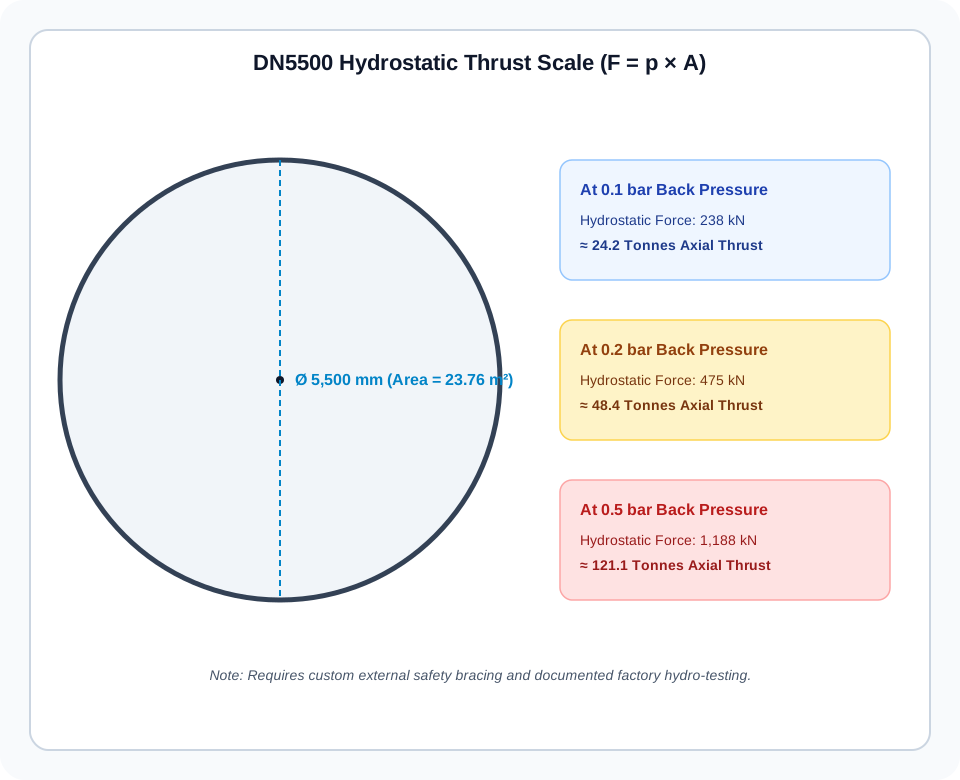
The defining engineering challenge of ultra-large diameter pipe isolation is hydrostatic thrust. Because cross-sectional area scales with the square of diameter ($A = \pi D^2 / 4$), a 5,500 mm internal diameter pipe presents a surface area of 23.76 square meters (255.7 sq ft).
As documented in research by Bavirisetti & Najafi (2018)PS.1949-1204.0000320) on elastomeric pipe plugs in gravity pipelines, holding friction is governed by the contact pressure against the pipe wall multiplied by the friction coefficient $\mu$. When back pressure builds behind the plug, the axial thrust escalates dramatically:
At 0.1 bar (1.0 m head of water): Total axial thrust equals 238 kN (~24.2 metric tonnes).
At 0.2 bar (2.0 m head of water): Total axial thrust escalates to 475 kN (~48.4 metric tonnes).
At 0.5 bar (5.0 m head of water): Total thrust reaches 1,188 kN (~121.1 metric tonnes).
This physics dictates why ultra-large plugs must be designed as dedicated single-size profiles rather than thin multi-size bladders. Single-size geometry maximizes cylindrical wall contact length and incorporates multiple layers of high-tensile aramid cord vulcanized directly into the synthetic rubber matrix.
Manhole opening vs deflated plug handling envelope
A common oversight during project procurement is verifying whether a custom plug can actually enter the pipeline. While deflated, a DN5500 plug is substantial: when folded flat and packaged with its heavy steel endplates and bypass flanges, the assembly can weigh upwards of 350 to 500 kilograms.
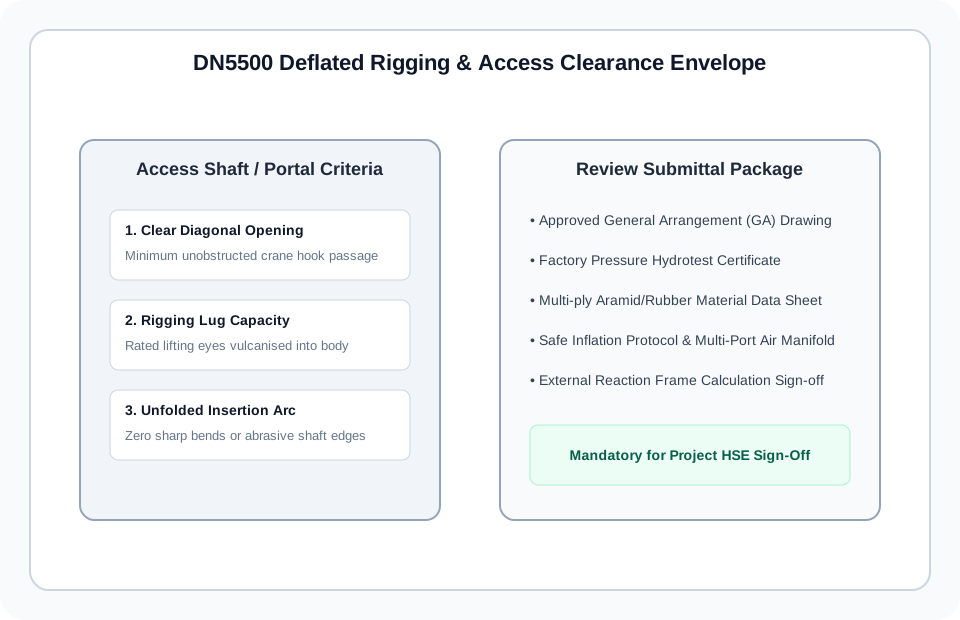
Before placing an order, the site team must verify three physical access parameters:
Clear Hatch Diagonal: Standard 600 mm or 900 mm manholes are completely inadequate. Access typically requires a dedicated launch shaft, removable culvert roof slab, or portal opening with at least 1.5 m × 2.0 m clear dimension.
Crane Rigging & Lifting Lugs: Custom plugs of this scale incorporate vulcanized heavy-duty lifting eyes along their spine. The rigging plan must ensure the plug is lowered horizontally or suspended vertically without kinking the internal rubber reinforcement.
Internal Turning Radius: If the entry shaft drops vertically onto a benching, verify there is sufficient axial clearance in the pipe invert to unfold the plug along its full length before inflation.
The drawing and test evidence to confirm
Safety standards for pressure containment, including the UK HSE GS4 Guidance, require formal verification before pneumatic devices are pressurized in confined underground spaces.
For any custom plug inquiry above DN2000, Reliance provides and requires sign-off on a submittal package comprising:
General Arrangement (GA) Drawing: Detailing exact deflated dimensions, inflated contact profile, endplate configurations, and bypass ports.
Factory Hydro-Testing Record: Every custom plug undergoes hydro-pneumatic proof testing inside a certified restraining ring at 1.5× working inflation pressure before shipping.
Inflation Manifold & Multi-Port Air System: Large plugs require dual inflation valves and a central calibrated safety relief valve to prevent localized over-pressurisation during high-volume compressor filling.
External Reaction Bracing Design: Because no friction plug should rely solely on rubber friction when personnel are working downstream under significant water head, an external steel reaction beam or shores must be planned and engineered.
Preparing the custom-plug enquiry
To expedite engineering design and avoid project delays, submit the following verified parameters with your initial technical request:
Measured Internal Pipe Geometry: True internal diameter (ID), pipe material (cast-in-place concrete, GRP, steel, or brick), and ovality tolerance.
Upstream Water Head / Allowable Back Pressure: Maximum hydrostatic head anticipated during the isolation period.
Access Route Dimensions: Smallest shaft entry dimensions, lifting crane capacity, and distance from surface to pipe invert.
Media and Chemical Exposure: Whether the conduit conveys treated potable water, raw municipal wastewater, or warm industrial cooling water.
Explore our full line of Single-Size Inflatable Pipe Plugs or contact our engineering specialists directly via the Custom Project Enquiry Form to review your large-diameter isolation requirements.
References and source documents
Further reading
Article
Disadvantages of Trenchless Pipe Lining: Limits, Failures, and DIY Risks
Article
Sewer Line Replacement: Permits, Insurance Coverage, and Lifespan
Article
Trenchless Sewer Repair Cost per Foot: CIPP, Epoxy, and Point Repairs
Buyer guide
How to Choose an Inflatable Pipe Plug