
Inflatable Pipe Plug Names: A Quotation Checklist
Turn balloon, pneumatic, stopper, test and bypass plug enquiries into comparable quotations with clear model, pressure, connection and scope records.
By Reliance Trenchless Technology6 min read
Continue with AI
Bring this article into your own conversation.
Preferred Sources
Keep up with Reliance Trenchless on Google.
Availability depends on your account and region.
Three contractors can answer one pipe plug enquiry with different terms: pipe balloon, pneumatic stopper, pipe bladder, test plug or flow bypass bung. These terms describe the general idea of sealing a pipe with compressed air. A purchase order that uses them does not define the product. A generic "plug" order that leaves out the duty (temporary isolation, water-tight testing or sewage bypass) can produce a tool that fails under backpressure or does not fit through the manhole frame. Turn the street name into an engineering specification before you compare quotations.
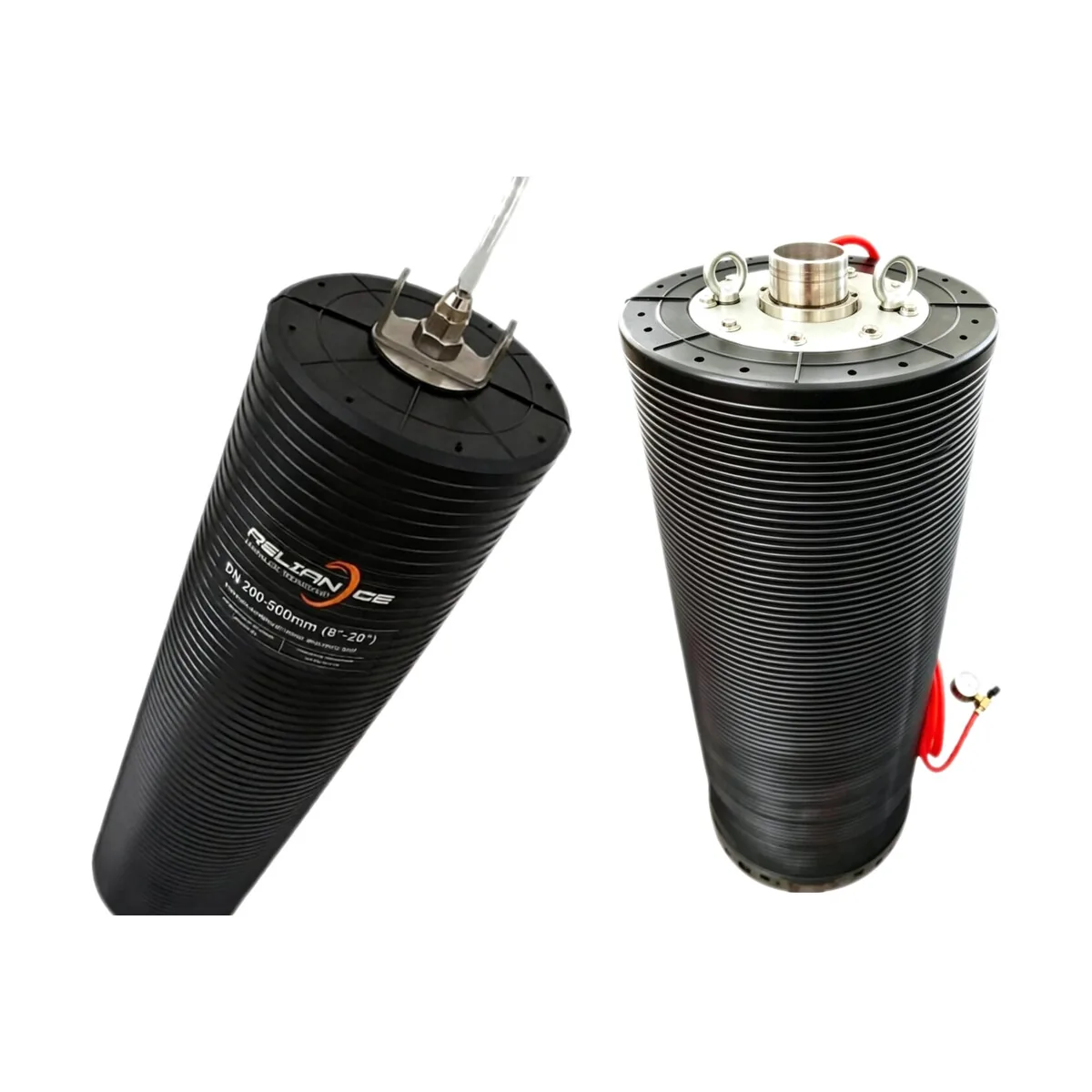
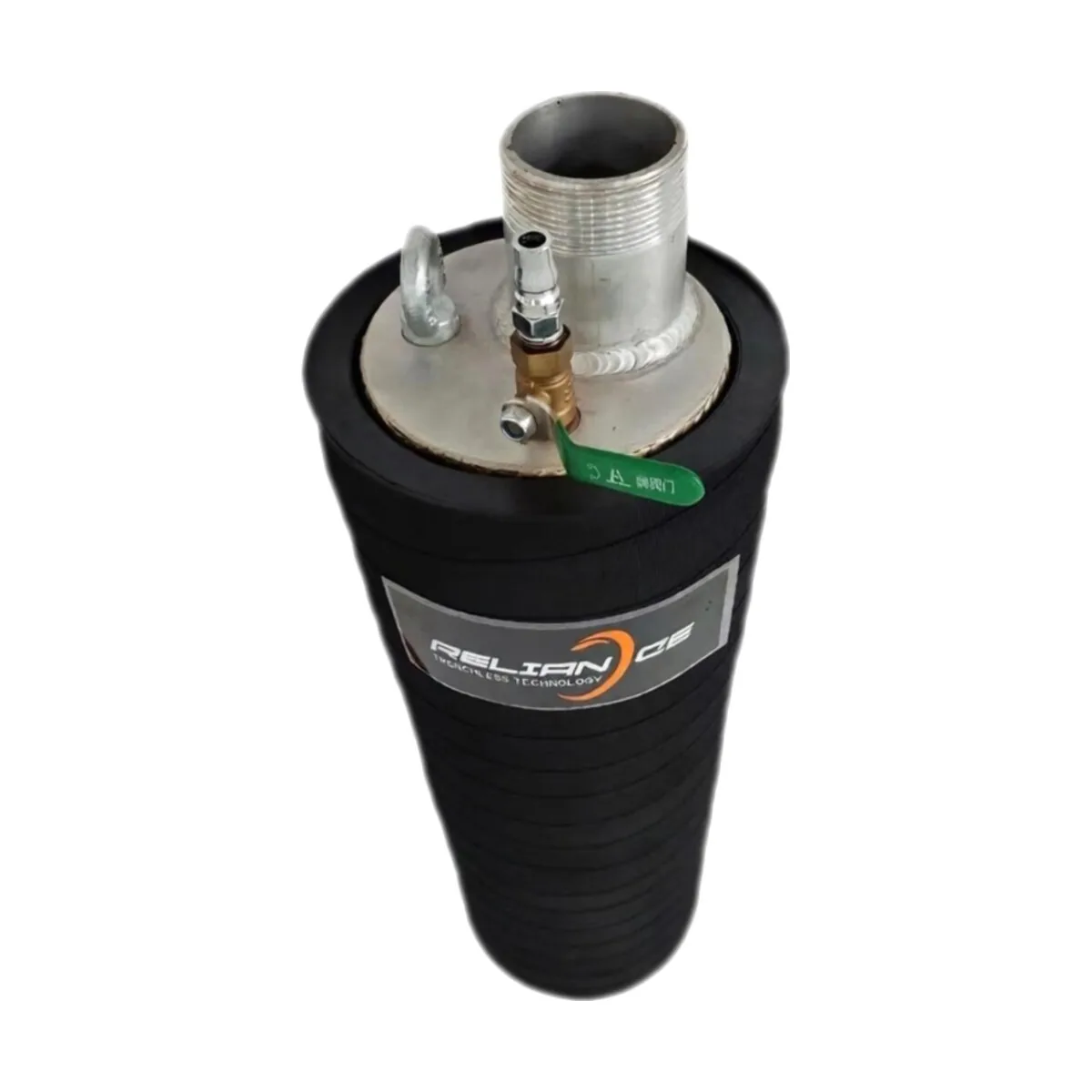
Start with Reliance multi-size pipe plugs. The original Plugs brochure, page 2 separates MS plugs without bypass, MSBP bypass plugs and TP testing plugs. That distinction provides a useful first check when a quotation simply says “pipe plug.”
Translate the enquiry into a configuration
Use the following terms as questions for the supplier, rather than treating them as interchangeable catalogue codes.
| Term in the enquiry | What the quotation should resolve |
|---|---|
| Inflatable pipe plug / pipe balloon plug / pneumatic pipe plug | Identify the actual product family, model and supported pipe range. |
| Inflatable pipe stopper | Confirm whether the requested configuration is single-size or multi-size. |
| Bypass pipe plug | Identify the through-passage and its connections; request the information needed to assess flow capacity. |
| Pipe test plug / inflatable test plug | Identify the test method, test medium, connections and acceptance requirements as well as the model. |
The single-size family is another configuration to discuss. Do not infer fit from “stopper,” “balloon” or a photograph. For the task itself, HSE GS4, paragraphs 1 and 5–6 identifies the assembly, pressure and test medium as relevant to pressure-testing risk assessment. It is UK safety guidance, not a product approval or a statement of Middle East legal requirements.
Keep three records separate
Do not assume that a plug's internal inflation pressure equals the backpressure it can hold back. Interface friction governs the seal. In Frictional resistance and safety factors of inflatable pipe stoppers under transient hydraulic backpressure, Shou & Chen (2018) (Tunnelling and Underground Space Technology) examined the slip failure mechanisms of pneumatic plugs under live sewer conditions. Their experimental and numerical simulations found that wet pipeline conditions, slime biofilm and sediment deposits reduce the effective static friction coefficient between the rubber body and the pipe wall by 30% to 50% compared with dry test benches. Under a sudden upstream water surge, an unbraced plug can slip even when inflated to nominal pressure. An engineering quotation must therefore separate working inflation pressure from allowable sliding backpressure, and site safety procedures must include mechanical bracing on pressurized upstream plugs.
Begin with the host pipe: measured internal diameter, material, condition and access restrictions. NASSCO’s assessment guidance, CCTV and Laser and Sonar sections distinguishes condition inspection from dimensional information such as diameter, ovality and offsets. A nominal pipe designation is not a substitute for those measurements.
The second record covers the selected model and configuration. The MS and MSBP tables list maximum inflating (working) pressure and maximum back (sliding) pressure separately. Preserve both field names and their model-specific values in the quotation. Do not copy one into the other or treat either as the project's test-pressure instruction.
The third record covers the task requirements and the approved work method. GS4 paragraphs 28–32 call for sufficient written information covering the test setup, fittings, monitoring and safe pressure evacuation. A catalogue selection is only one input to that work.
A bypass opening needs a flow review
A bypass pipe plug enquiry should state what must pass through the isolated location and under what conditions. Request passage dimensions, connection details and the data needed by the person designing the flow arrangement. The MSBP catalogue table does not provide a flow-capacity curve, so a “bypass” label alone cannot establish that the proposed arrangement handles the site flow.
For any pressure-test assembly, GS4 paragraphs 34–36 require suitable hose and connector ratings for the test pressure and medium, accessible manufacturer data and compatible components. A visible opening does not supply those specifications.
Make competing quotations comparable
Ask each supplier to return the same information:
The selected model, supported pipe range and access dimensions, with the original drawing or specification.
Inflation and back-pressure fields separately, including the conditions that apply to that model.
Whether a bypass is included, its connections and the basis for assessing the required flow.
An itemized list of hoses, gauges, mating parts and other accessories, with their compatibility documents.
The test method and acceptance requirements where testing is intended; any unresolved fit or configuration questions.
This is a quotation checklist, not an installation procedure. The inflatable pipe plug selection guide supports the broader review, while testing plugs have their own catalogue information.
For a Middle East delivery, also give the destination, required delivery date, expected site conditions and documentation language. These are enquiry fields, not claims of local stock or a delivery commitment. Send the specification for a multi-size plug review.
Frequently Asked Questions About Pipe Plug Quotations
Are "pipe balloon", "pneumatic stopper" and "test plug" interchangeable names?
No. This article treats them as enquiry terms that need clarification, not as catalogue codes. A quotation should identify the product family, model and supported pipe range, and should confirm whether the configuration is single-size or multi-size. Do not infer fit from the name or from a photograph.
Should inflation pressure and backpressure appear as separate fields in a quotation?
Yes. The MS and MSBP tables list maximum inflating (working) pressure and maximum back (sliding) pressure separately. Keep both field names and the model-specific values in the quotation, and do not treat either as the test-pressure instruction for the project. Inflation pressure alone does not establish the backpressure a plug can hold.
Does a bypass model prove that the site flow will pass?
No. The MSBP catalogue table does not provide a flow-capacity curve, so a "bypass" label cannot establish that the arrangement handles the site flow. State what must pass through the isolated location and under what conditions. Then request the passage dimensions, connection details and the data needed by the person designing the flow arrangement.
Which records should accompany the enquiry?
Keep three records: the measured host pipe, the selected model and configuration, and the task requirements with the approved work method. For the pipe, record internal diameter, material, condition and access restrictions; NASSCO assessment guidance separates condition inspection from dimensional information. GS4 paragraphs 28–32 call for written information on the test setup, fittings, monitoring and safe pressure evacuation. A catalogue selection is only one input to that work.
Can a quotation confirm stock or a delivery date for a Middle East site?
No. Destination, required delivery date, expected site conditions and documentation language are enquiry fields. They are not claims of local stock or a delivery commitment. Confirm availability, delivery and documentation requirements with Reliance for the specific project.
References and source documents
Further reading
Article
How a Pipe Plug Holds Back Sewer Head: Pressure, Area and Friction
Article
Pipe Leak and Break Repair: Joint Seal, Sleeve, Patch or CIPP?
Article
Pipe Repair Kit: Matching Packers, Resin and Fiberglass
Buyer guide
How to Choose an Inflatable Pipe Plug