What CCTV Inspection Information Is Needed Before Pipe Point Repair?
By Reliance Trenchless Technology
Useful CCTV information connects an observation to an identifiable pipe and a location within it. Keep the original recording, asset reference, direction, distance and surrounding context together before requesting a point-repair review.
This guide organizes information for a technical review. It does not replace engineering assessment, provide a CCTV coding manual, diagnose a defect or instruct anyone to enter or operate in a sewer or confined space.
This guide is available in English. Choosing another language opens that language’s resource library.
1. Identify the asset and survey
Start with the asset or pipe-section identity used by the project. Record the survey date, upstream and downstream references, survey direction, operator or record source where available, and the report or file version.
An isolated close-up is less useful when it cannot be connected to the pipe, survey and direction. Keep the original recording and report with any extracted screenshots.
Sources and supporting product information
NASSCO assessment context for CCTV and pipeline condition recordsReliance point-repair systems2. Locate the observation with its reference system
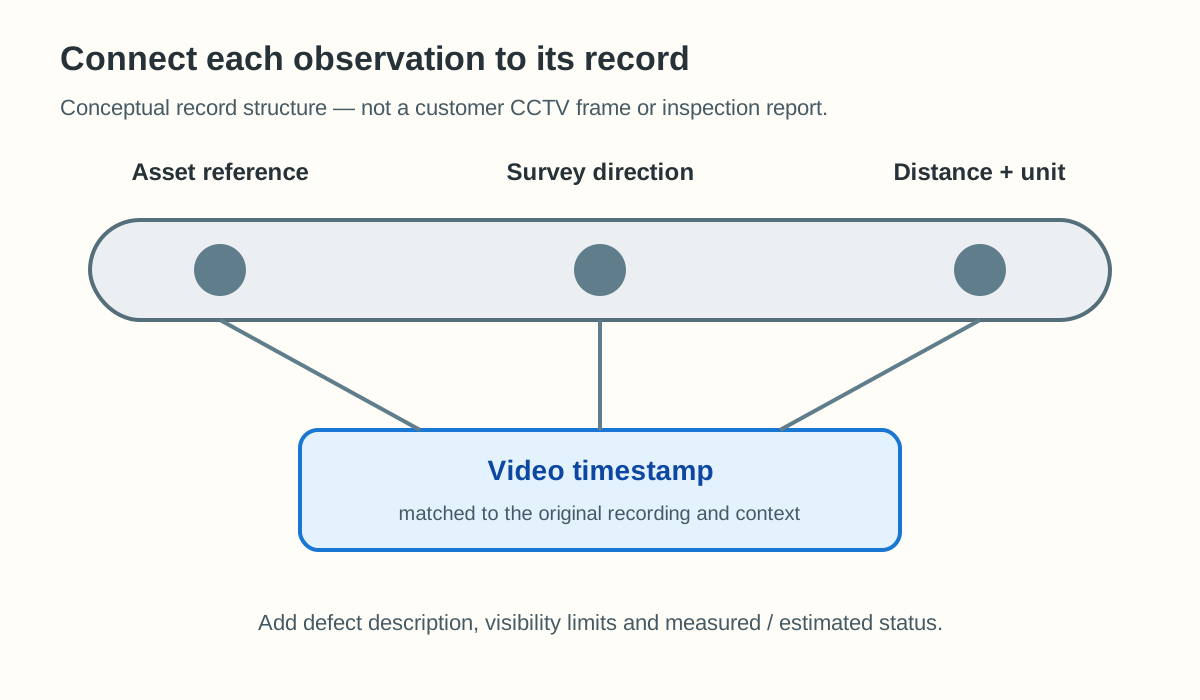
For each observation, record the video timestamp, distance reference and unit, direction and the surrounding context before and after the defect. If a clock-position convention is used, state the convention rather than assuming every survey uses the same orientation.
Distance and timestamp are locating evidence; they are not automatically a precise measurement of a defect. Preserve the instrument or report source when a value is presented as measured.
Sources and supporting product information
NASSCO assessment context for CCTV and pipeline condition records3. Separate measurement from estimation
Mark each field as measured, reported by the inspection system, visually estimated or unknown. A screenshot can show appearance and context, but it should not be presented as a calibrated diameter, gap or structural measurement unless the source supports that interpretation.
When a dimension matters to a repair review, provide the original record and explain how it was obtained. Do not reverse-engineer a number from pixels or from a model label.
| Information | Why it matters | Where to find it | Measured, estimated or unknown |
|---|---|---|---|
| Asset and pipe section | Connects the observation to the correct pipe. | Project register, drawing and report header. | Blank |
| Survey direction | Explains the reference direction and location. | CCTV report and original recording. | Blank |
| Distance reference and unit | Allows the reviewer to locate the observation. | Video overlay, report and survey log. | Blank |
| Video timestamp and surrounding context | Connects a screenshot to the original evidence. | Original video and exported frame. | Blank |
| Defect description and visibility | Shows what was observed and what may be hidden. | Report, video and images. | Blank |
| Dimension or location estimate | Separates a visual estimate from an instrument record. | Inspection system or field note. | Blank |
| Access and nearby features | Helps review positioning and treatment boundaries. | CCTV context, drawings and site record. | Blank |
Sources and supporting product information
NASSCO assessment context for CCTV and pipeline condition recordsReliance point-repair systems4. Retain the original record
Keep the full original recording or the project’s controlled copy, not only the most obvious frame. Name screenshots so they can be matched to the video, timestamp, report and asset reference.
A cropped frame may omit a connection, obstruction, change in geometry or visibility limit that changes the review. Preserve enough surrounding footage to explain the observation.
Sources and supporting product information
NASSCO assessment context for CCTV and pipeline condition records5. Report visibility and coding limits
Record standing water, debris, fogging, lighting, camera centering, obstruction, reverse viewing or any other limitation that affects what can be seen. Missing data should remain missing rather than being filled by a confident description.
NASSCO describes CCTV assessment and standardized condition records as part of pipeline assessment. This article uses that concept to explain why consistent records help a review; it does not reproduce a coding manual or claim that Reliance or the author holds a NASSCO certification.
Sources and supporting product information
NASSCO pipeline assessment resourcesNASSCO PACP, LACP and MACP training and standardized records6. Prepare a review package
Assemble the asset reference, original video, report, screenshots with timestamps, distance and direction, defect description, visibility limits, measured or estimated fields, drawings and access information. For a localized repair discussion, link the package to the repair packer guide, internal joint seal measurement guide and sectional versus full-length scope comparison.
The package supports a technical conversation; it does not automatically diagnose a repair or approve a product.
Sources and supporting product information
Reliance point-repair systemsNASSCO assessment context for CCTV and pipeline condition recordsNASSCO pipeline assessment resourcesWhat to include in your enquiry
Send the information you have and identify what still needs measurement or confirmation. A requested delivery date is a requirement to review, not a promised lead time.
Asset and pipe-section reference.
Survey date, direction, upstream/downstream references and file version.
Distance reference, unit and video timestamp for each observation.
Original recording plus contextual frames before and after the observation.
Defect description, visibility limits and nearby connections.
Measured, estimated and unknown fields clearly labeled.
Access, drawings and project acceptance information for the review.
Related product pages
The primary button preselects Pipe Repair Packers for Point Repair as a discussion starting point; it does not select a system or confirm suitability. The contact form opens an email draft for you to review and send. Opening it does not confirm delivery.