Sectional Point Repair vs Full-Length CIPP Lining
By Reliance Trenchless Technology
The useful first distinction is the extent of rehabilitation, not a slogan about point repair or CIPP. Map the defect distribution and treatment section, then compare the documented method, access and project requirements.
This is a method-scoping comparison, not a CIPP design, cost estimate, lifespan claim or installation procedure. Full-length lining is included as comparison context; no Reliance full-length lining system is offered or implied here.
This guide is available in English. Choosing another language opens that language’s resource library.
1. Clarify the terms before comparing them
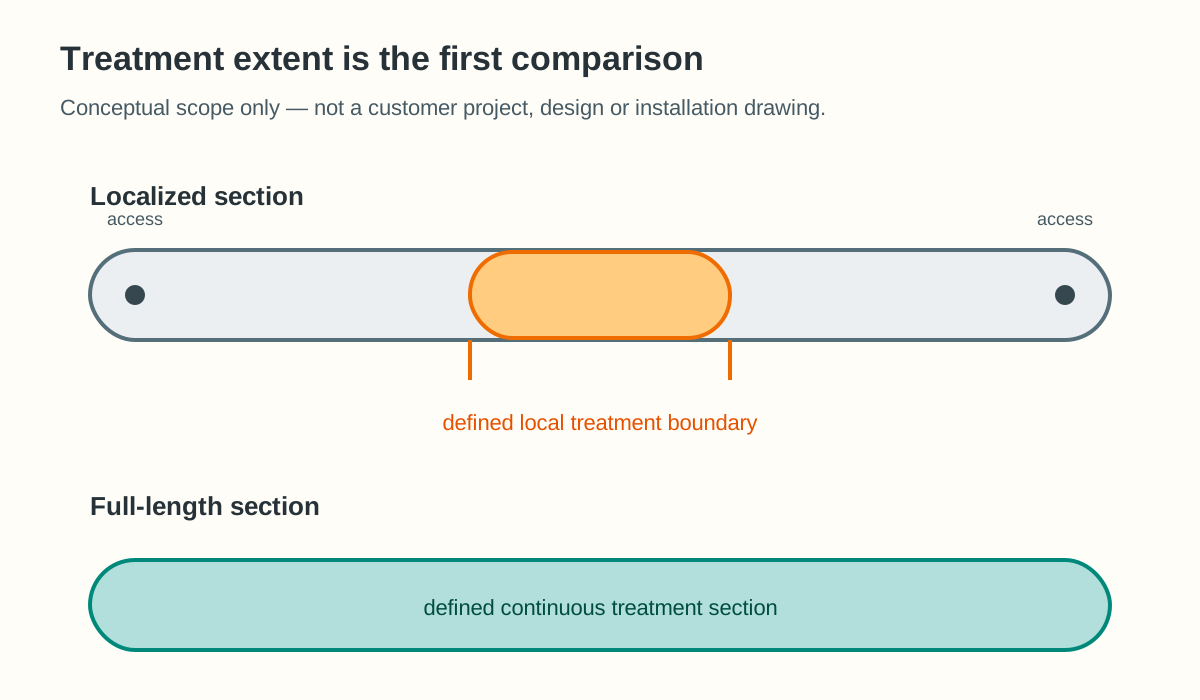
“Point repair” describes a localized treatment area, while “full-length CIPP lining” describes treatment over a longer defined section using a cured-in-place lining method. Some localized resin repairs also use a cured-in-place process, so the labels are not perfect opposites.
For this article, compare a localized point-repair scope with a full-length lining scope. Do not write that every point repair is outside CIPP or that every CIPP project treats a full pipe.
Sources and supporting product information
Reliance point-repair systemsReliance fiberglass and resin repair systemTrelleborg CIPP liners and calibration hoses: external method context only2. Map the defect distribution
Start with the inspection record: is the issue recorded at one location, several separated locations or across a continuous section? The distribution is evidence for the project discussion, not an automatic selection algorithm.
Also record pipe identity, access, geometry, connections and flow-management constraints. A short list of defects does not by itself prove that a localized method is feasible, and a long affected section does not by itself approve a lining design.
Sources and supporting product information
Reliance point-repair systemsCCTV information guide for point-repair review3. Compare the project scope
Use the table to frame the method review. The “local” column refers to a localized treatment area; the “full-length” column refers to a defined continuous section. Both still require a project-specific method, design and acceptance plan.
| Evaluation question | Localized approach | Full-length approach | Project evidence needed |
|---|---|---|---|
| Where are defects distributed? | One or separated locations may be reviewed as individual treatment areas. | A continuous affected section is considered as one treatment scope. | CCTV record, defect map and pipe identity. |
| What section is treated? | A defined local repair area and its required coverage. | A defined longer section between project boundaries. | Measured location, start/end references and method documents. |
| What access matters? | Access to each repair location and positioning equipment. | Access for the lining process and the full treatment section. | Access survey, obstructions and connection records. |
| What flow planning is needed? | Flow management for the local work area and duration. | Flow management for the longer treatment operation. | Project method statement and site conditions. |
| What connections need review? | Nearby laterals or features around the local repair. | Connections and reinstatement across the treated section. | CCTV context, drawings and owner requirements. |
| How is the result accepted? | Inspection and records for each localized repair. | Inspection and records for the continuous lining scope. | Agreed acceptance criteria and project documents. |
Sources and supporting product information
Reliance point-repair systemsTrelleborg CIPP liners and calibration hoses: external method context only4. Avoid price and life shortcuts
A localized scope may reduce the treated area, but this guide does not calculate savings, cost per metre, installation duration or service life. Total project cost and time depend on access, flow management, preparation, equipment, materials, connections and acceptance requirements.
Do not describe either route as always faster, cheaper, stronger or longer-lasting. Compare documented scopes rather than repeating a universal percentage.
Sources and supporting product information
Reliance point-repair systemsTrelleborg CIPP liners and calibration hoses: external method context only5. Recognize the limits of a general guide
Severe collapse, major geometry changes, multiple interacting defects or missing inspection context can require additional engineering judgment. This page does not diagnose those conditions or provide a method statement.
Industry and manufacturer material can explain a method, but a different manufacturer’s liner, resin or approval belongs to that system. It must not be rewritten as a Reliance capability or compatibility claim.
Sources and supporting product information
Trelleborg CIPP liners and calibration hoses: external method context onlyReliance point-repair systems6. Connect the comparison to actual product pages
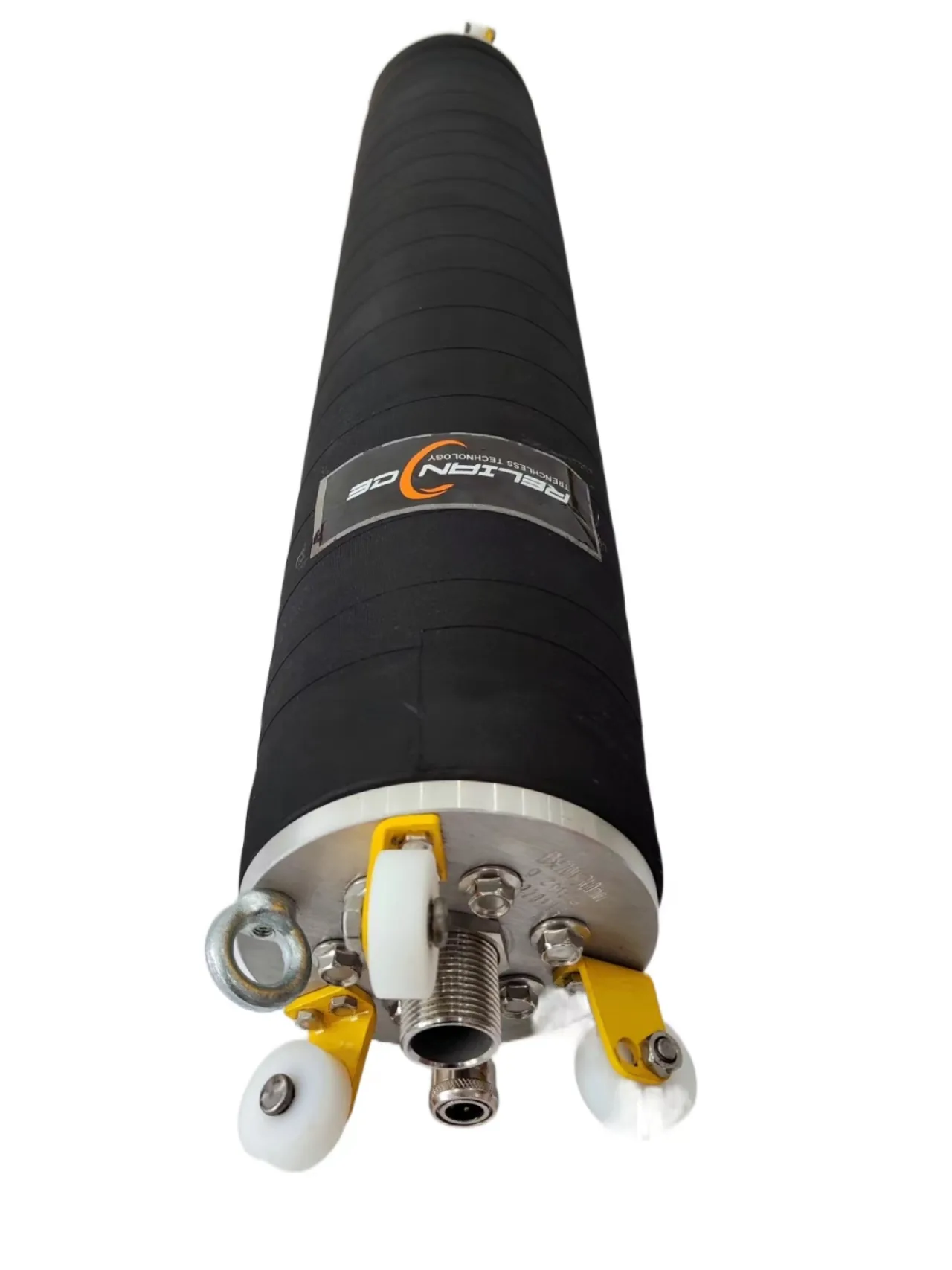
For localized repair products, review the point-repair systems family, repair packers, fiberglass and resin and internal repair sleeves. These pages describe the Reliance products in the localized-repair context.
Full-length CIPP remains comparison language in this guide. It is not a Reliance product offer, and this page does not create a product page, certification or installation service for it.
Sources and supporting product information
Reliance point-repair systemsReliance repair packersReliance fiberglass and resin repair systemReliance internal repair sleevesWhat to include in your enquiry
Send the information you have and identify what still needs measurement or confirmation. A requested delivery date is a requirement to review, not a promised lead time.
Asset and pipe-section identity.
CCTV defect distribution: local, separated or continuous, with visibility limits.
Treatment boundaries and access information.
Laterals, connections, geometry and flow-management constraints.
Documented method, design and acceptance requirements.
Any external method or manufacturer claims kept within their original product boundary.
Related product pages
The primary button preselects Pipe Repair Packers for Point Repair as a discussion starting point; it does not select a system or confirm suitability. The contact form opens an email draft for you to review and send. Opening it does not confirm delivery.