Trenchless Pipe Lining: How CIPP Works and When It Fits
Learn how trenchless pipe lining works, when sectional CIPP fits, what to check before lining a sewer, and which costs an itemized quote should cover.
By Reliance Trenchless Technology8 min read
Continue with AI
Bring this article into your own conversation.
Preferred Sources
Keep up with Reliance Trenchless on Google.
Availability depends on your account and region.
Replacing a deteriorating sewer under a city street means excavation, traffic control and reinstatement. Trenchless pipe lining, and specifically Cured-In-Place Pipe (CIPP), places a new composite pipe inside the old one instead. A resin-impregnated felt or fiberglass liner goes in through existing manholes and cures under ambient conditions, hot water, steam or UV light, so cracked or leaking pipes can be rehabilitated without a continuous open trench. CIPP does not fit every sewer: the repair may be a sectional patch at one defect or a continuous liner over the full length. The condition survey, the defect pattern and the structural variables below set the scope before anyone prices equipment or installation.
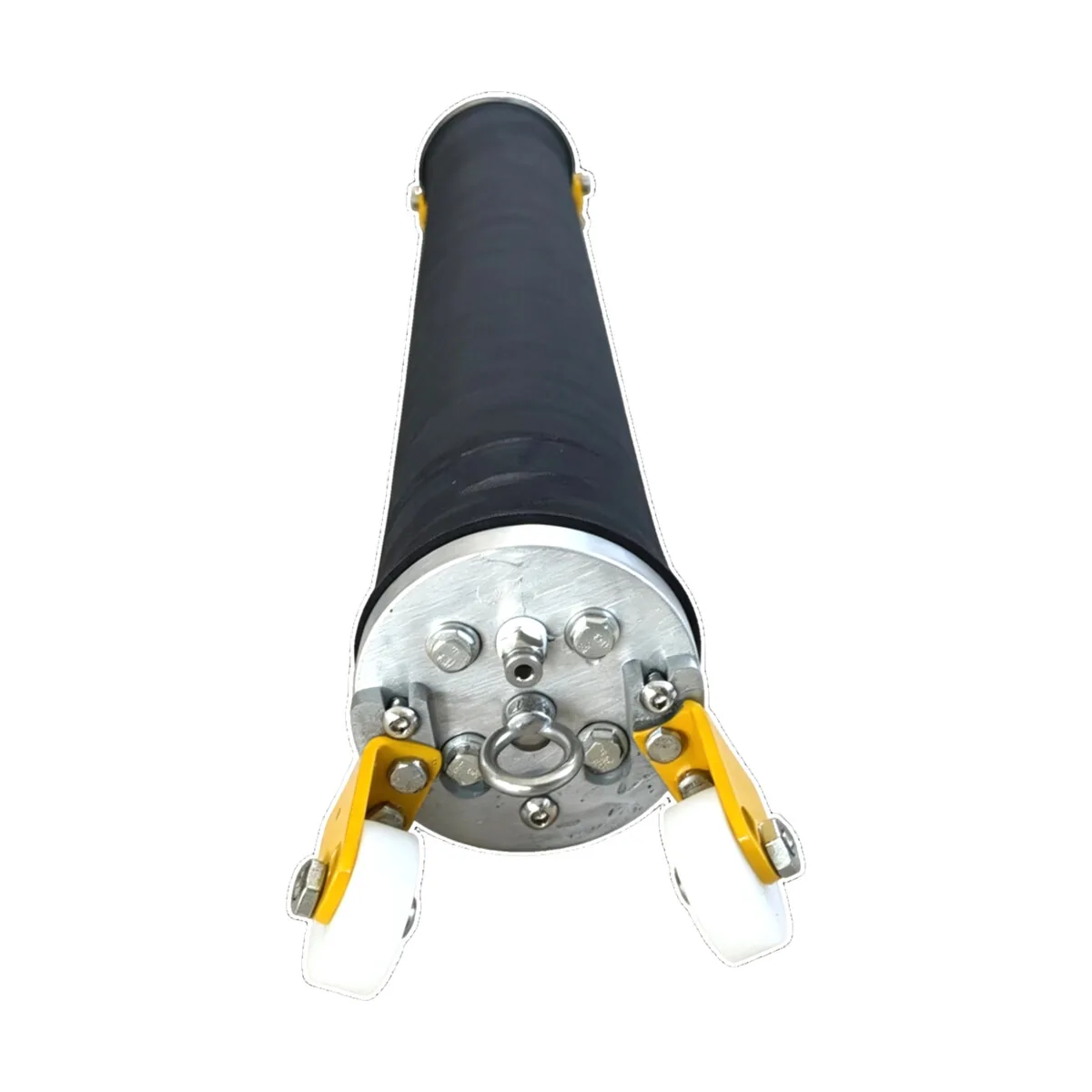
For a sectional CIPP repair, an inflatable packer positions and supports the repair material at the defect. Reliance repair packers belong to this equipment category. The packer is the installation tool; the cured repair material remains in the pipe. A packer purchase is therefore only one part of a lining project. See NASSCO’s CIPP Joint/Spot Repairs section and Reliance’s packer brochure, page 1.
What Is Trenchless Pipe Lining?
Pipe lining creates a lining within a retained host pipe. CIPP is one method; NASSCO also describes sliplining and spiral-wound lining, which use different materials and installation systems. “Trenchless pipe lining” and “CIPP” are related terms, but they are not interchangeable names for every rehabilitation method. Source: NASSCO, Mainline rehabilitation methods.
For CIPP installed by inversion, the public scope of ASTM F1216-26, section 1.1 describes a flexible resin-impregnated tube inverted into the existing conduit and cured to form a continuous, tight-fitting pipe. This is a description of that standard’s scope, based on its publicly available text; it is not a review of the full standard or evidence that a Reliance product is certified to it.

Pipe bursting is a different choice: it breaks or splits the old pipe while drawing in a replacement. NASSCO notes that lateral bursting typically requires access pits. “Trenchless” should therefore prompt a discussion about the actual excavation required, rather than an assumption that every job involves no digging. Source: NASSCO, Lateral Pipe Bursting.
How Does CIPP Pipe Lining Work?
When specifying a CIPP liner under a standard such as ASTM F1216, the design question is what keeps a thin composite liner from buckling under high groundwater. In Long-term structural behavior of cured-in-place pipe liners under external hydrostatic pressure, Guice et al. (1994)90004-2>) (Trenchless Technology Research) loaded CIPP liners of several diameters for more than 10,000 hours of continuous accelerated external hydrostatic loading. Their results relate the long-term buckling resistance of a CIPP liner under external groundwater head to the long-term creep retention factor of the resin matrix (typically 50% of the initial short-term flexural modulus over a 50-year lifespan). Wall thickness calculations that leave out groundwater table height and host pipe ovality do not cover that condition. For a sectional repair, the repair material and resin system have to suit the external water head at the defect.
The general process is to place resin-impregnated material inside the host pipe, hold it in the intended position and cure it. NASSCO describes ambient, heat and light-based curing systems. The applicable method depends on the liner and resin system; a curing method or setting from one system cannot be assumed suitable for another. Source: NASSCO, CIPP and CIPP Joint/Spot Repairs.
For a local repair, NASSCO describes felt or fiberglass material wrapped around an inflatable packer and positioned at the defect. The packer supports that repair during curing and is then recovered. This explains why the tool’s access dimensions and usable repair length matter separately from the material specification. Use the repair packer selection guide to prepare the equipment questions.

Reliance’s Plugs brochure, page 1 lists different packer configurations, including lateral packers without bypass and packers with bypass. Its Resin Glassfiber brochure describes the separate resin and reinforcement materials. Confirm the proposed combination and working conditions with the supplier; these documents do not establish a universal pressure, cure time or full-length lining system.
Is the Existing Pipe Suitable for Lining?
Start with a condition survey. NASSCO’s assessment guidance identifies structural condition, maintenance condition and physical dimensions as basic rehabilitation information. CCTV can locate defects, service connections and obstructions; dimensional inspection adds measurements such as diameter, ovality and offsets.
For lateral CIPP, NASSCO describes a host pipe with cracks, fractures or holes that has generally maintained its original shape. That qualification matters. A collapse or serious geometry problem needs a specific engineering assessment; a lining product description alone does not establish suitability. Source: NASSCO, Lateral CIPP.
Before requesting a proposal, assemble:
The CCTV report, defect locations and affected lengths.
Pipe material, measured internal diameter and any dimensional changes.
Access openings, bends and the route the equipment must travel.
Service connections and the required repair boundaries.
Flow conditions, the rehabilitation objective and acceptance requirements.
This is a project information checklist, not a pass/fail design rule. The CCTV preparation guide explains how to make the inspection record useful for product selection.
Sectional Repair or Full-Length Lining?
A short repair and a full-length liner address different coverage requirements. NASSCO describes CIPP for localized damage as well as longer segments. Choose coverage from the defect distribution and the rehabilitation objective; do not choose it solely from the length of an available packer. Source: NASSCO, CIPP.
| Question | Sectional repair review | Full-length lining review |
|---|---|---|
| What needs treatment? | Define the local defect and repair boundaries. | Define the whole section and its rehabilitation requirements. |
| What equipment is being quoted? | Check the packer, repair material and access arrangement. | Identify the complete liner installation and curing system. |
| What happens at connections? | Confirm nearby connections remain functional. | Specify connection reinstatement and end details. |
| What proves completion? | Agree on inspection and acceptance for the repaired location. | Agree on inspection and acceptance for the lined section. |
For a detailed comparison, use sectional point repair versus full-length CIPP. A localized repair packer should not be treated as the equipment package for lining an entire run.
What Affects Trenchless Pipe Lining Cost?
Compare itemized proposals for the same repair objective and scope. Ask each bidder to identify survey and cleaning, access works, flow management, liner materials, installation and curing, service connections, inspection and surface restoration. State what is included, excluded or provisional. This is a purchasing checklist, not a measured price model.
Connection work deserves an explicit line in the proposal: NASSCO describes robotic equipment used to reinstate service connections and separate methods for rehabilitating main-to-lateral connections. Lining the main does not by itself specify all connection work. Source: NASSCO, connection lining and Self-Propelled Cutter/Camera Robots.
An equipment price is not an installed price per metre or foot. Without a location, survey and defined scope, a single price range can mislead. Likewise, ask for the specific system’s design basis, warranty terms and supporting records before relying on a service-life claim.
Frequently Asked Questions About Trenchless Pipe Lining
Does every damaged sewer suit a trenchless lining?
No. NASSCO describes lateral CIPP for host pipes with cracks, fractures or holes that have generally kept their original shape. A collapse or a serious geometry problem needs a specific engineering assessment, and a product description alone does not settle suitability. Start with the CCTV and dimensional survey, then confirm the proposed equipment and material system with the supplier.
How much digging does trenchless pipe lining still require?
The liner goes in through existing manholes, so the road along the run does not have to be opened for the lining itself. Access, service connections, local obstructions and the selected method still set the excavation scope; NASSCO notes that lateral pipe bursting usually needs access pits. Agree the actual access and reinstatement work in the project plan rather than treating trenchless as a promise of zero excavation.
Does the repair packer stay in the pipe after a sectional CIPP repair?
No. The packer is the installation tool: it holds the resin-impregnated repair material at the defect while the material cures, then it is recovered. The cured repair remains in the pipe. The packer’s access dimensions and usable repair length therefore belong in the equipment review, separately from the material specification.
What should a trenchless pipe lining quote include?
Ask for itemized lines for survey and cleaning, access works, flow management, liner materials, installation and curing, service connections, inspection and surface restoration. Mark what is included, excluded or provisional, and compare bids on the same repair objective. Connection reinstatement deserves its own line. An equipment price is not an installed price per metre or foot.
Discuss Equipment for a Local CIPP Repair
If the assessment identifies a sectional repair, review Reliance repair packers, the selection guide and the original packer brochure. Send the measured bore, repair length, access restrictions, flow conditions, proposed material system and CCTV findings with your enquiry.
Discuss repair packer selection with Reliance. These details support a product and configuration review; final rehabilitation design and installation acceptance remain project-specific.
References and source documents
Further reading
Article
How a Pipe Plug Holds Back Sewer Head: Pressure, Area and Friction
Article
Pipe Leak and Break Repair: Joint Seal, Sleeve, Patch or CIPP?
Article
Inflatable Pipe Plug Names: A Quotation Checklist
Buyer guide
How to Choose a Pipe Repair Packer
Buyer guide
Sectional Point Repair vs Full-Length CIPP Lining
Buyer guide
What CCTV Inspection Information Is Needed Before Pipe Point Repair?